
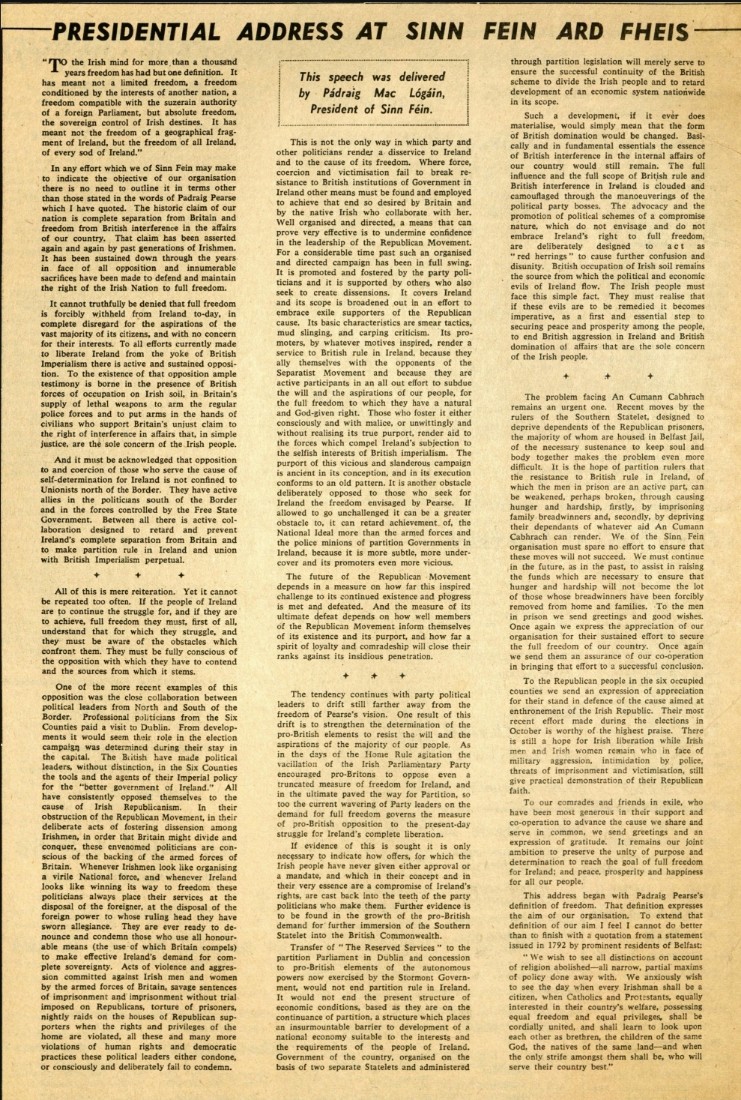
The 1950s were a pivotal yet often overlooked period in the history of Irish Republicanism. After the failure of the 1940s campaign (often referred to as the “S-Plan” or sabotage campaign in England), the IRA was in a weakened state. By 1950, the organization was focused on rebuilding its structure and membership, particularly in the North and along the border areas. The IRA’s leadership, under figures like Tony Magan and Paddy McLogan, began planning for a renewed campaign against British rule in Ireland. This would eventually culminate in the Border Campaign (Operation Harvest), launched on the 12th of December 1956.
The plan for the border campaign – codenamed “Operation Harvest” – was devised by Seán Cronin. It envisaged the use of guerrilla units called flying columns, initially four units of about 50 men each. They were to operate from the South and to attack military and infrastructural targets within the North. Cronin believed that a strong campaign of attacks on RUC barracks, military installations and government buildings would force the withdrawal of security forces from townlands, villages and small towns, thereby making large parts of the north ungovernable.
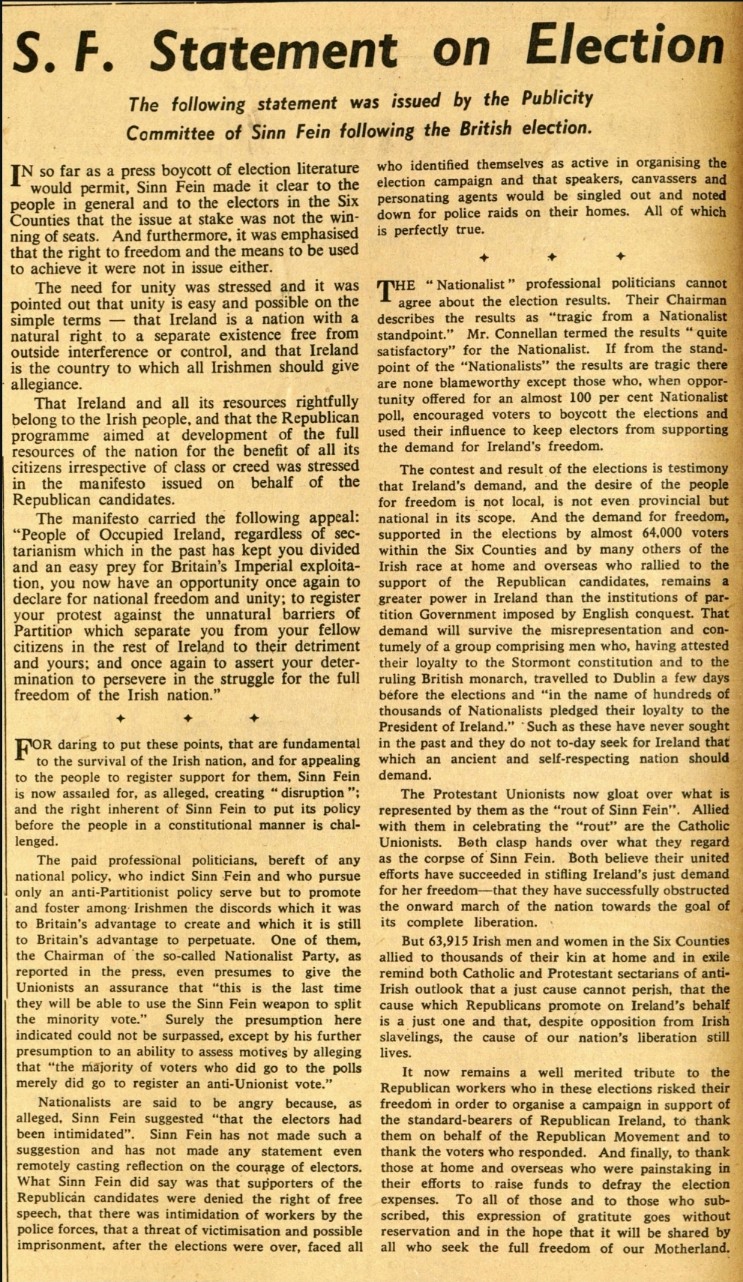
The campaign received, initially, significant support from the south. Support increased massively after the deaths of Seán South and Fergal O’Hanlon in the Brookeborough Raid. In the 26 County elections held in 1957, Sinn Féin fielded 19 candidates and won four seats, and almost won a couple more in tightly contested elections. One of the four new Sinn Féin TDs would be future IRA Chief of Staff Ruairí Ó Brádaigh.
1950
 50 Years Ago (1950) (4) |  Elections in the North | 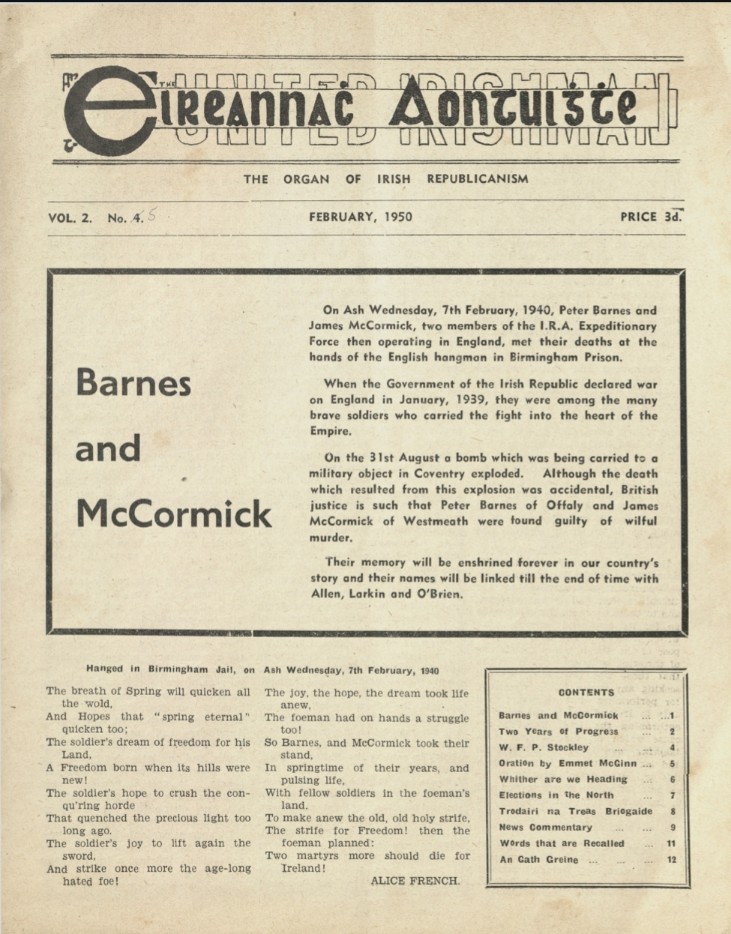 The United Irishman (February) |
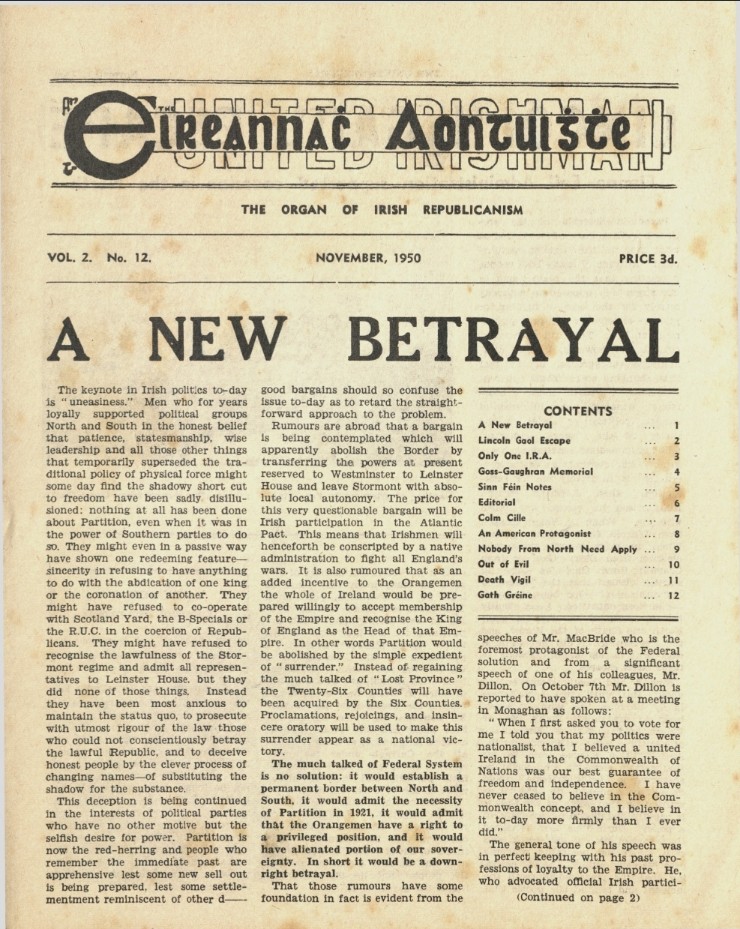 The United Irishman (November) | 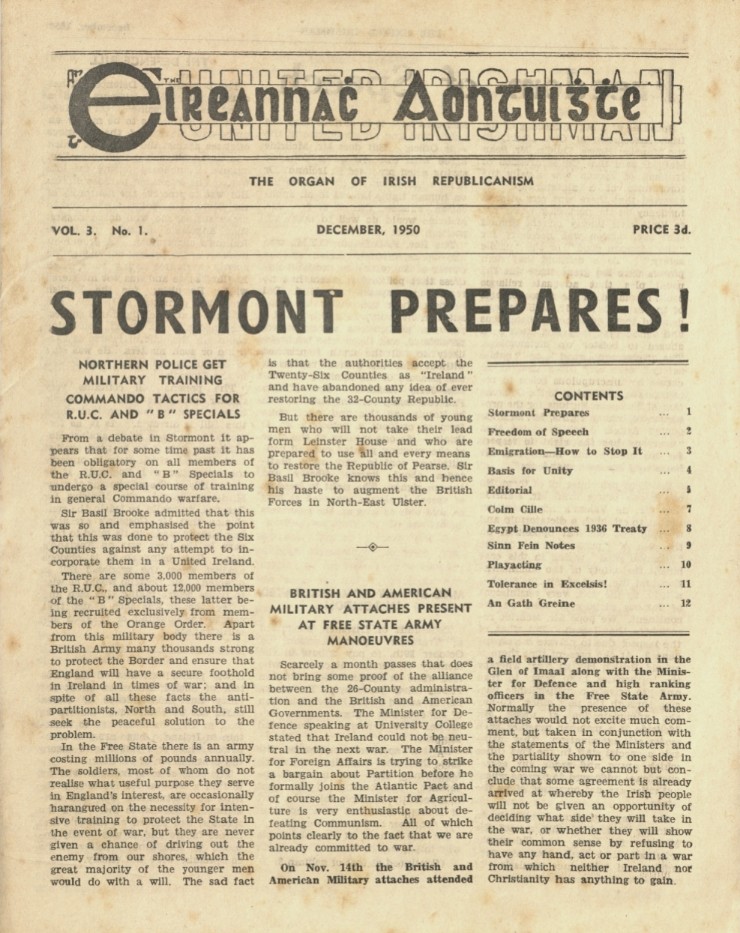 The United Irishman (December) |
1951
 50 Years Ago (1951) (4) | 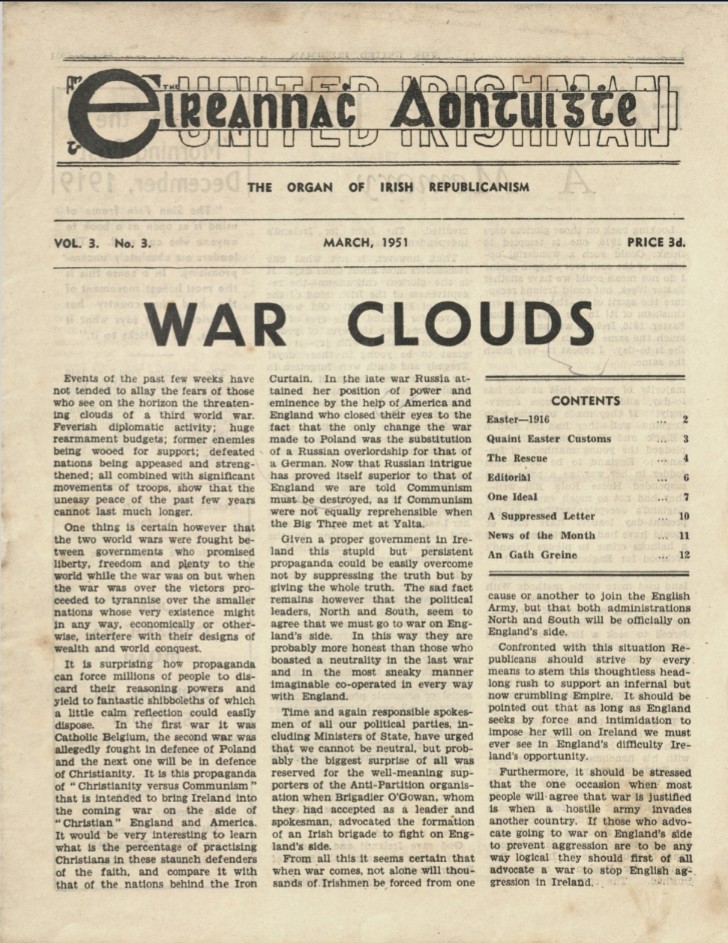 The United Irishman (March) |  The United Irishman (September) |
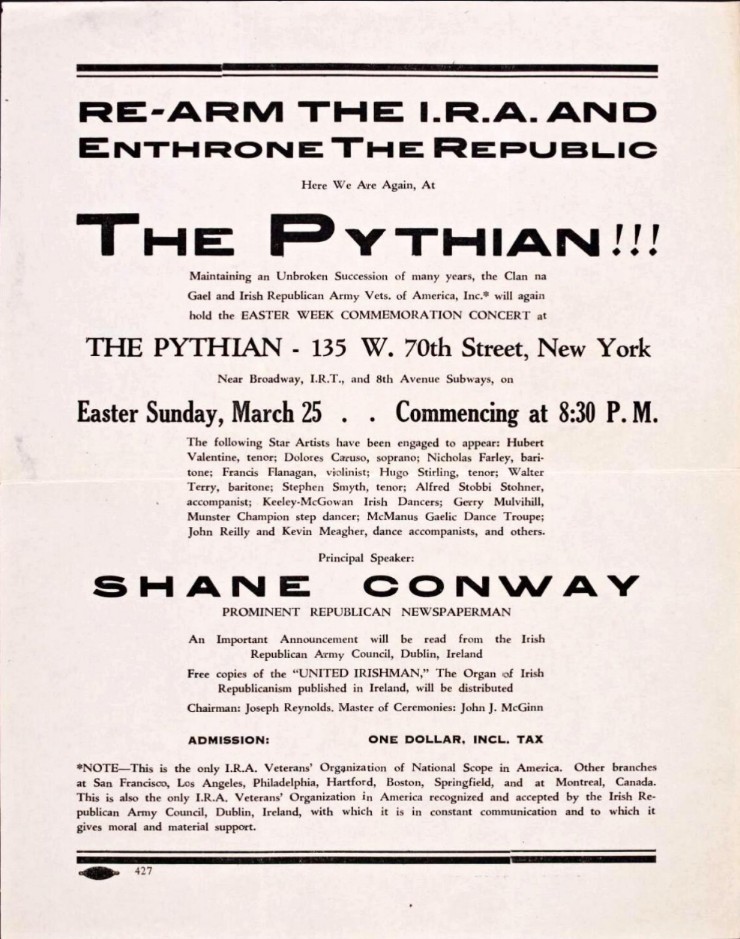 Clan na Gael Easter Poster (1951) |
1952


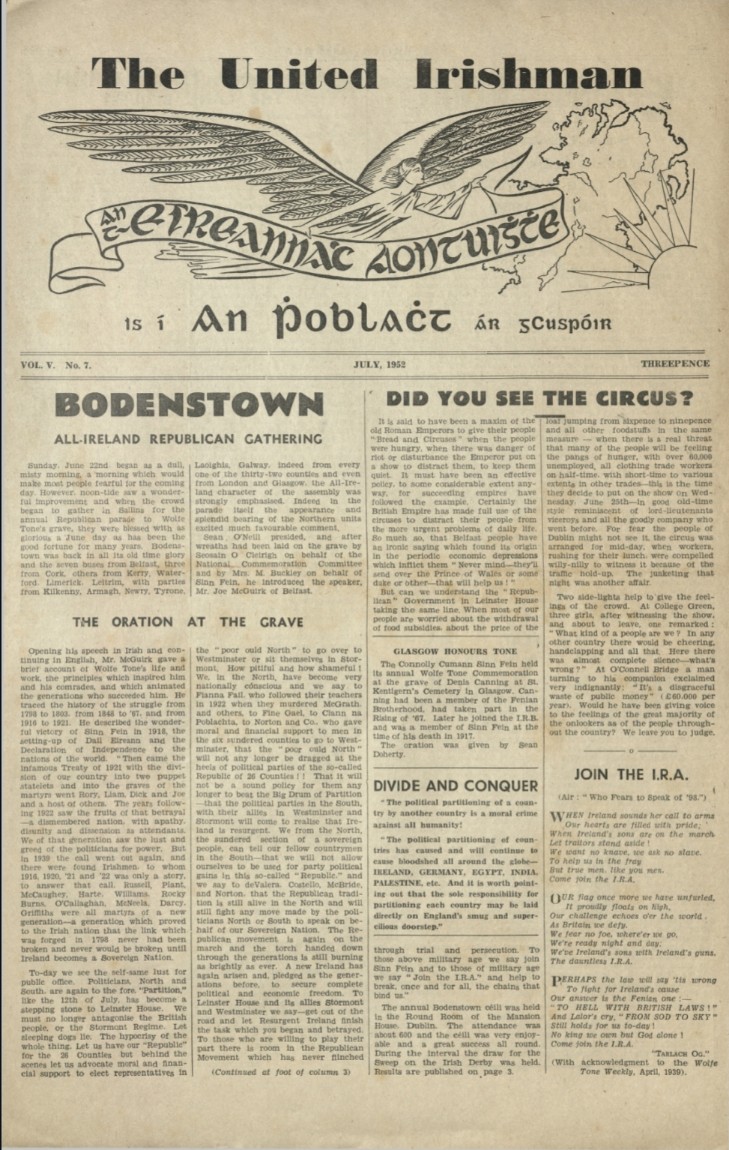


1953


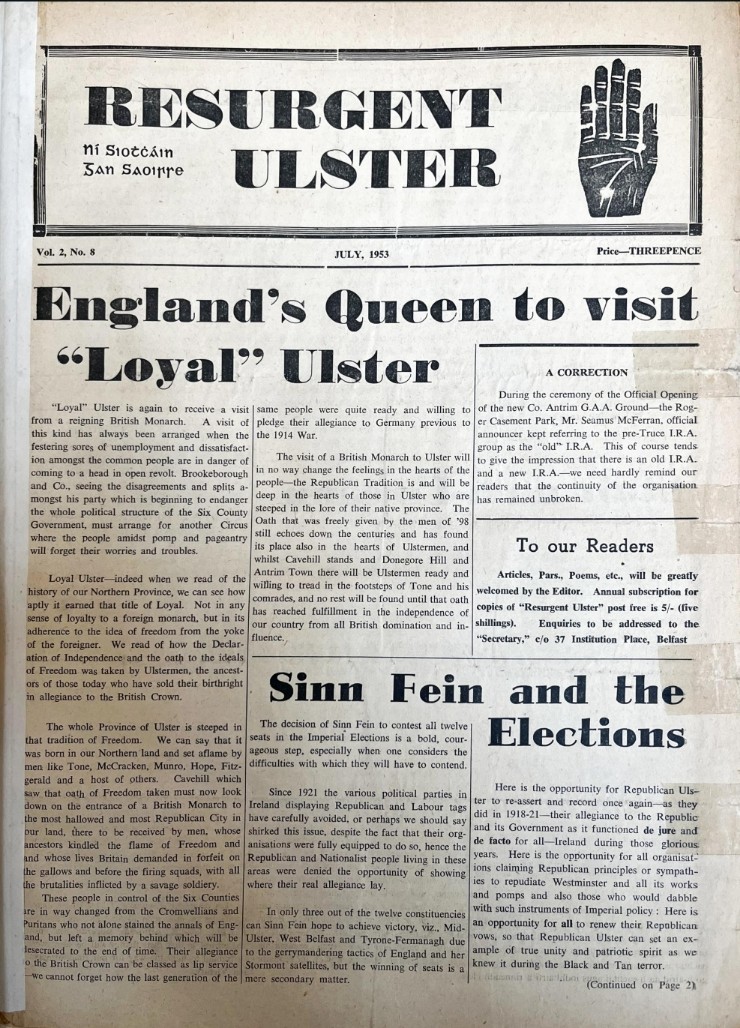


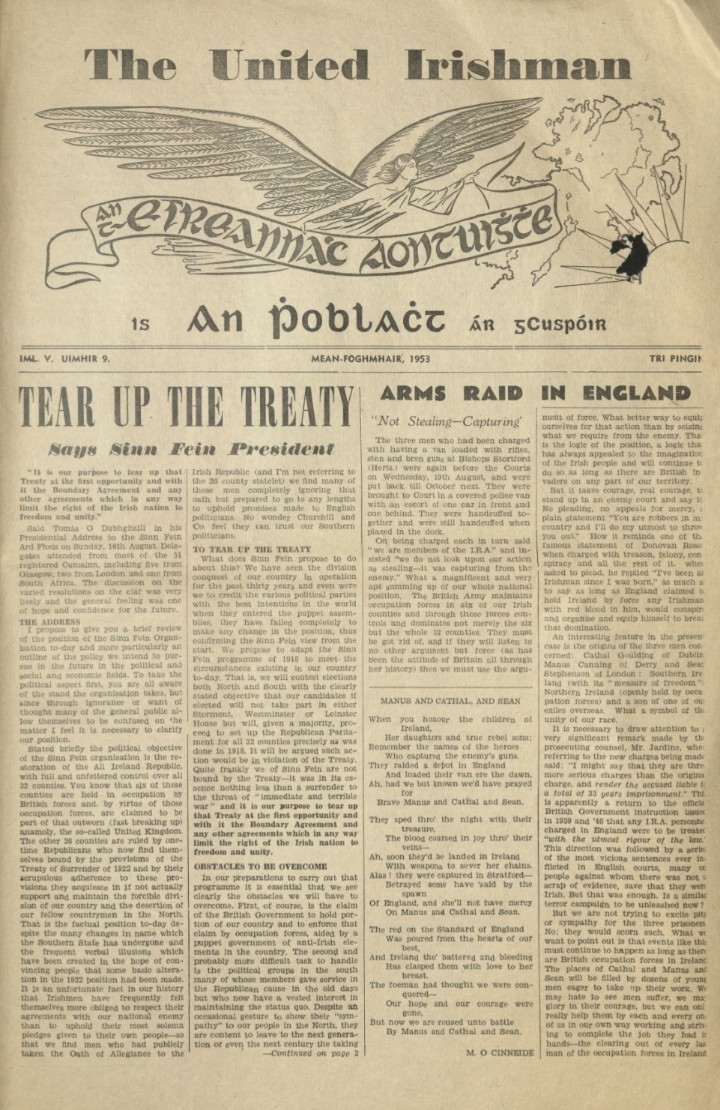
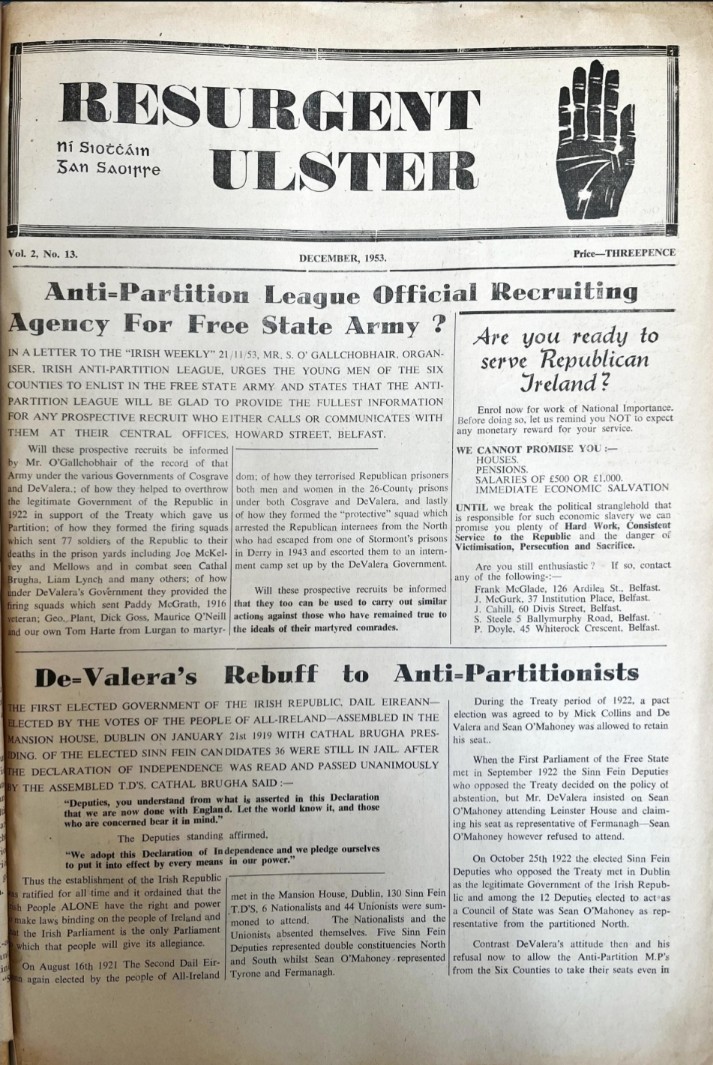
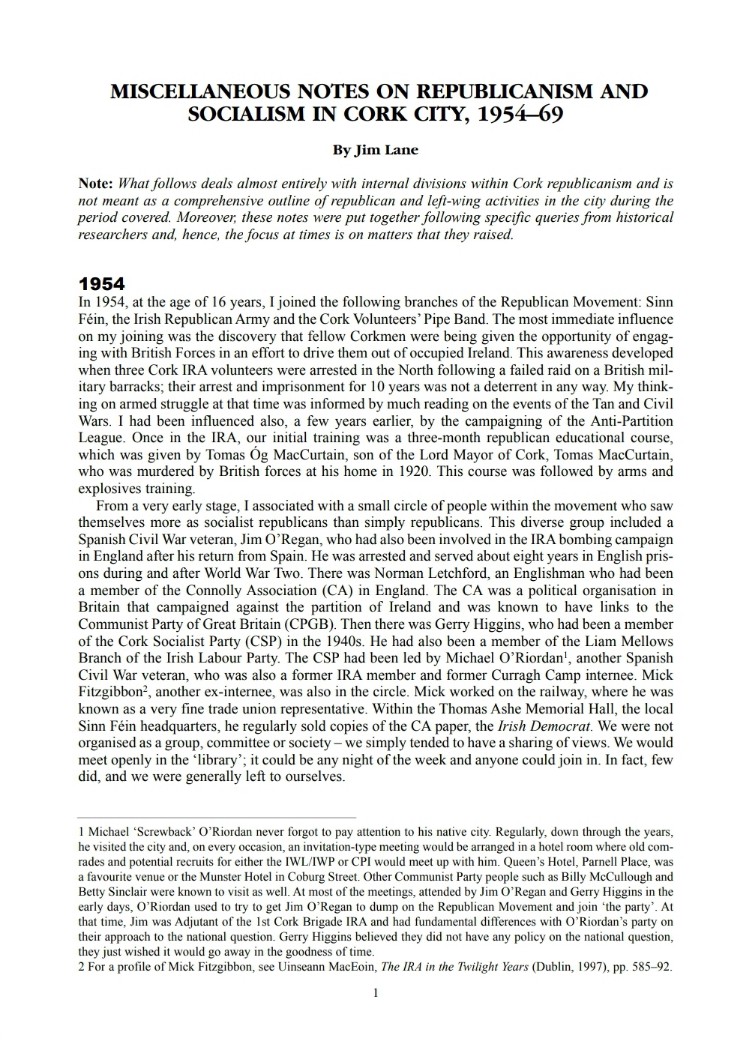
1954
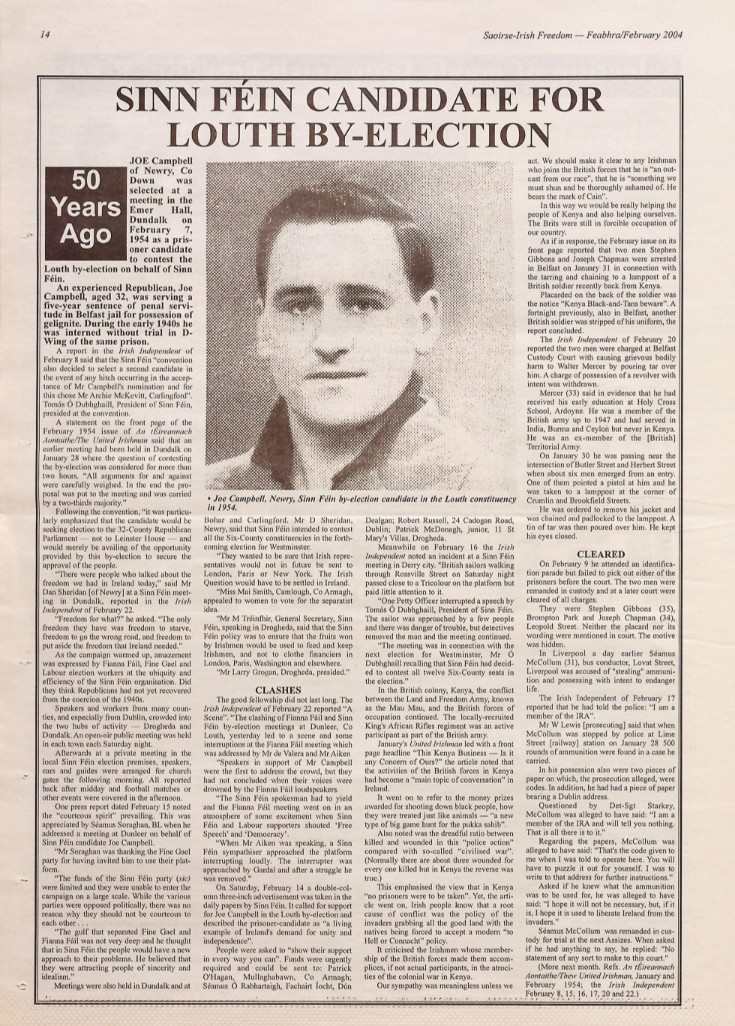
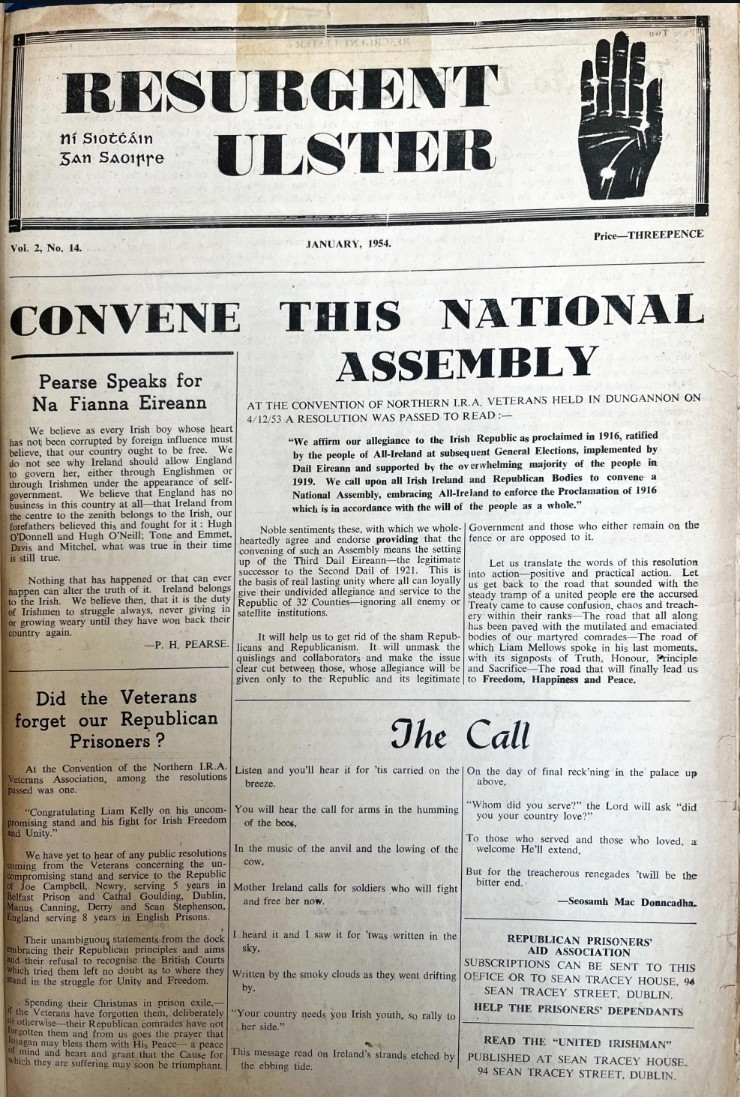


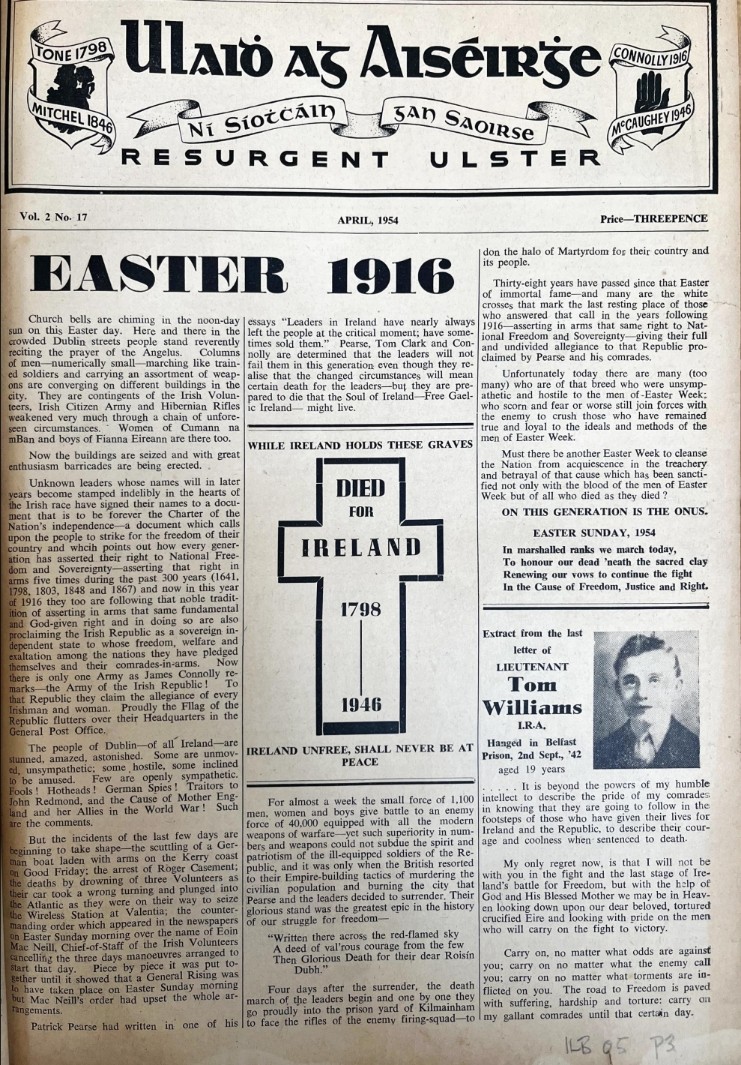

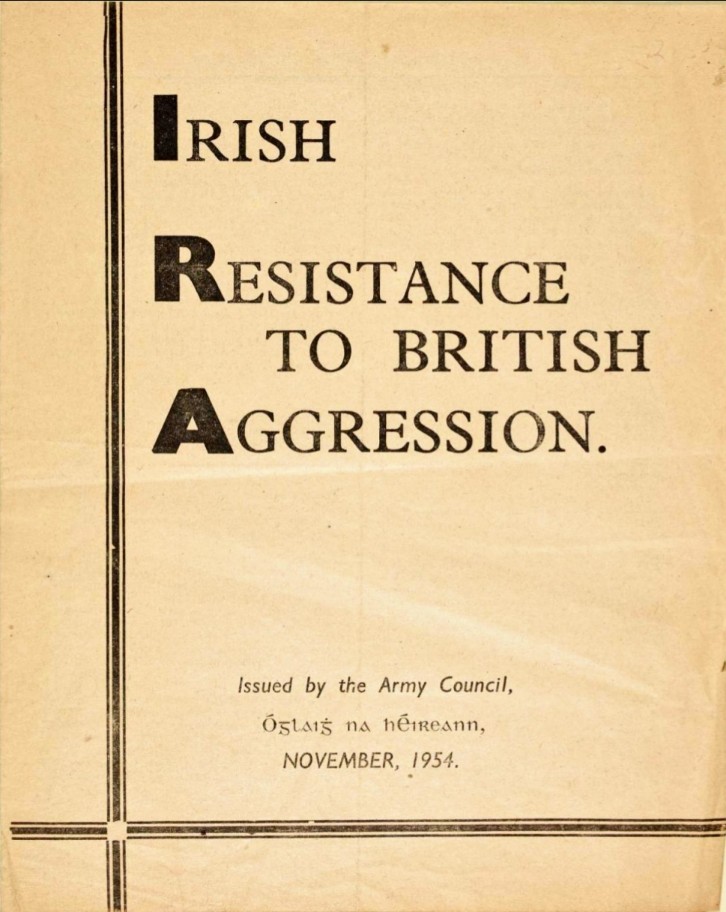


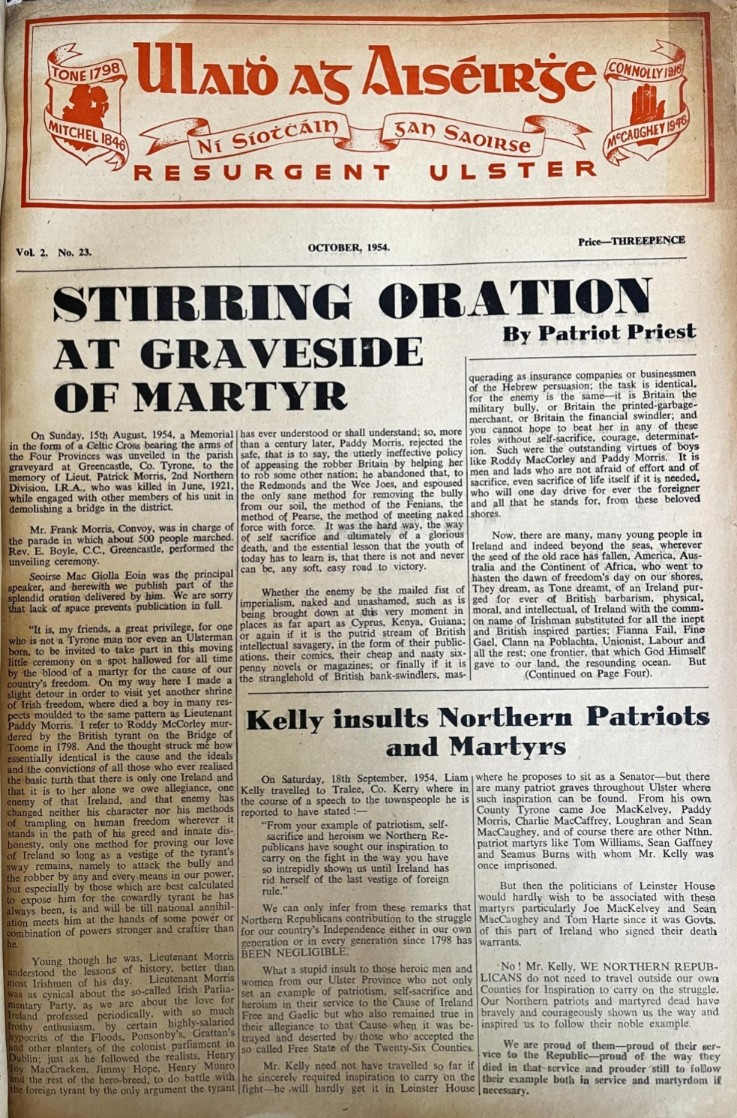

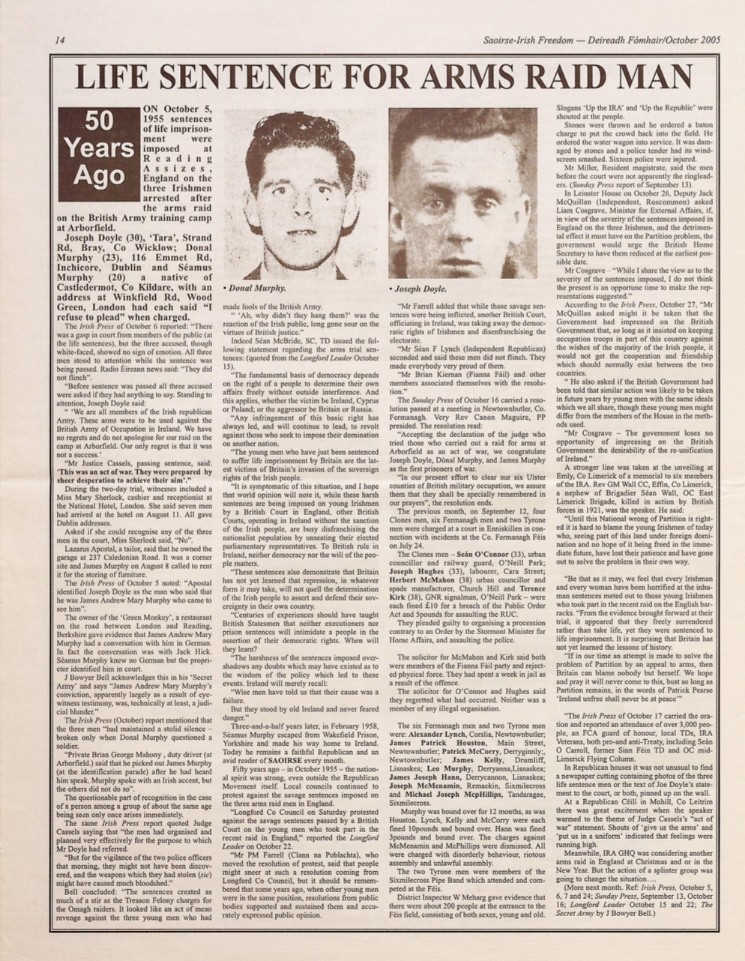
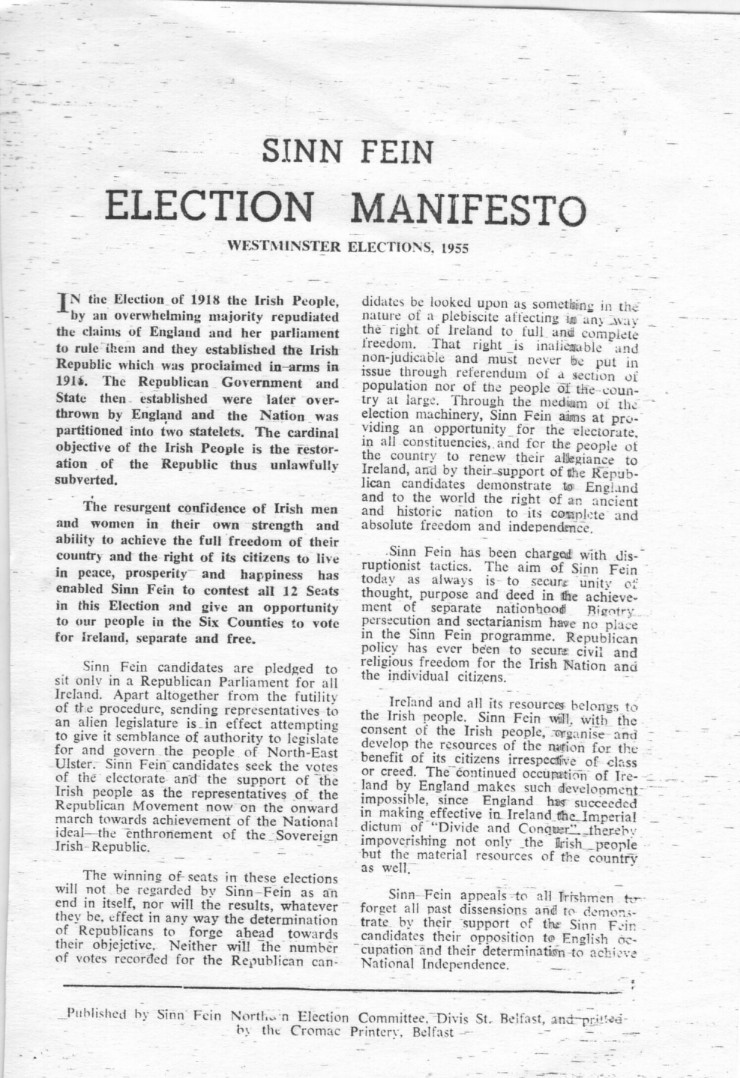
1955

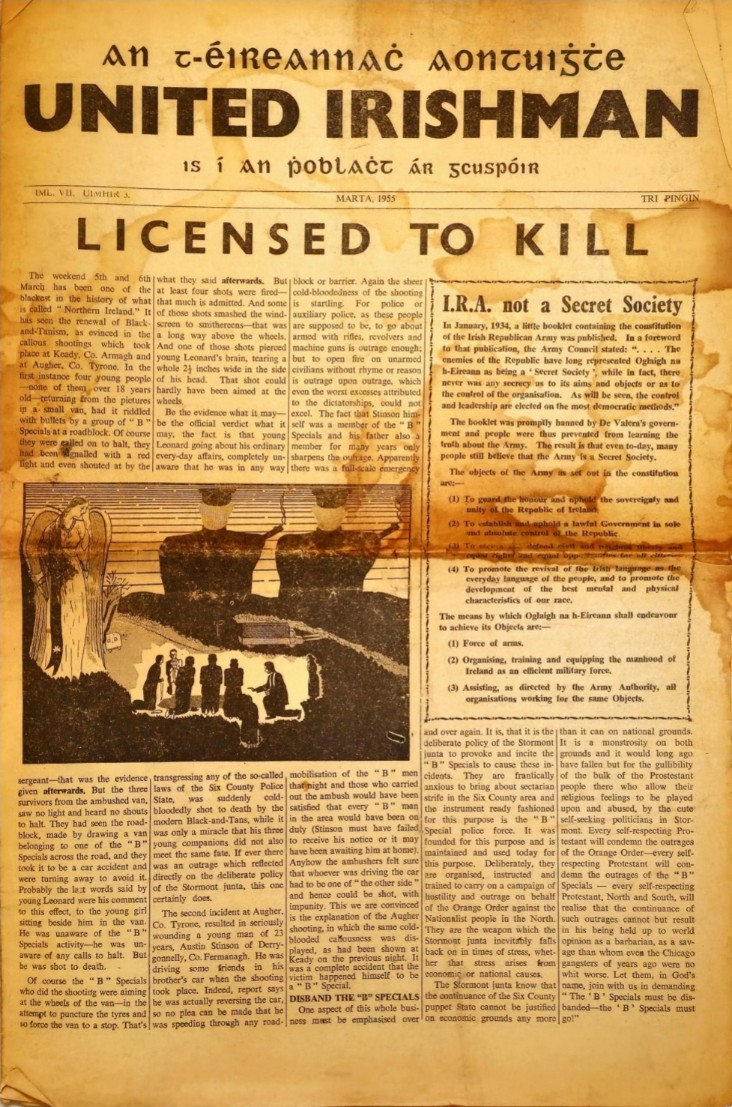


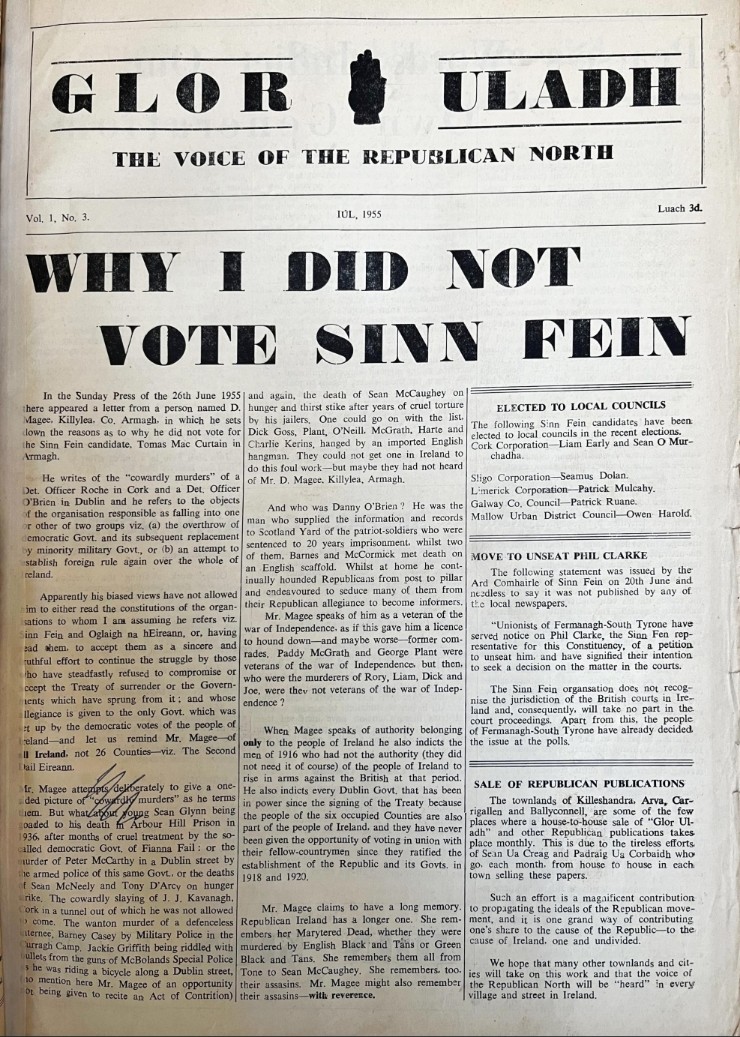
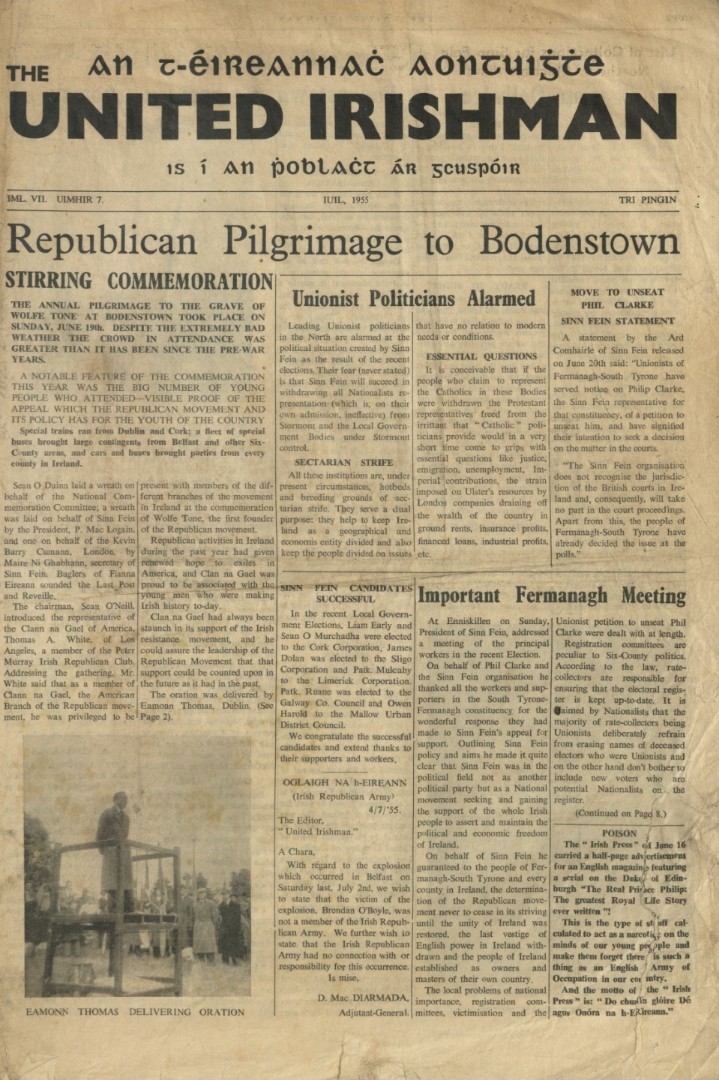
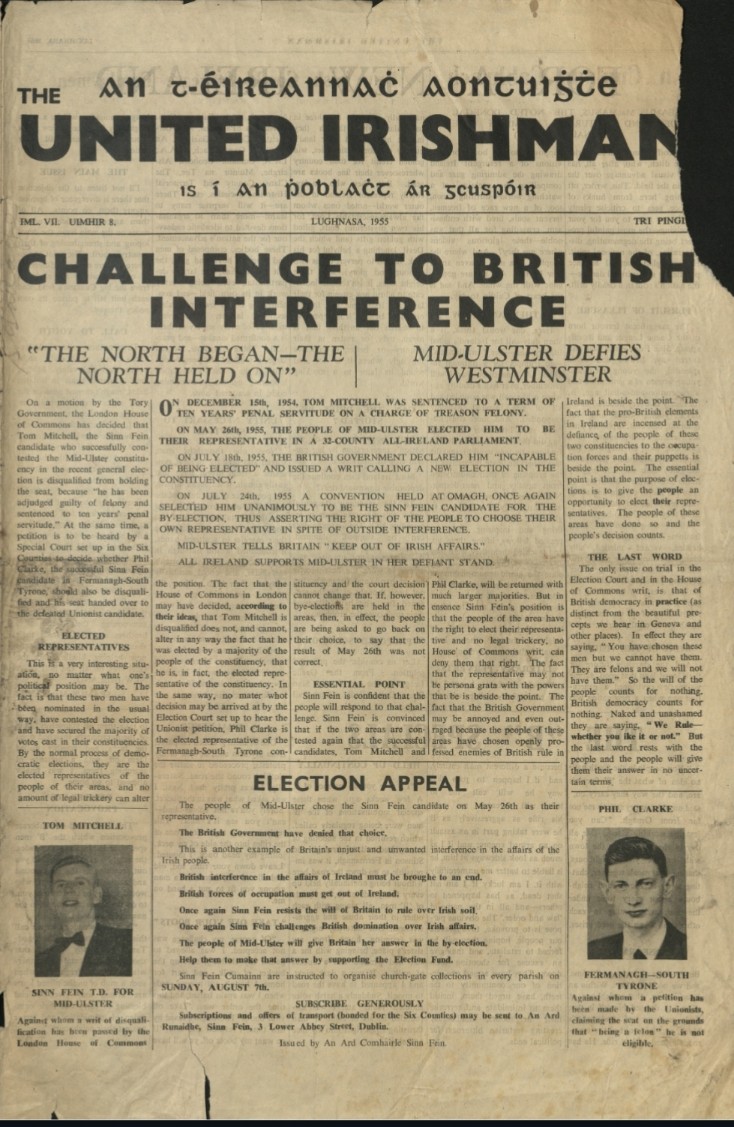
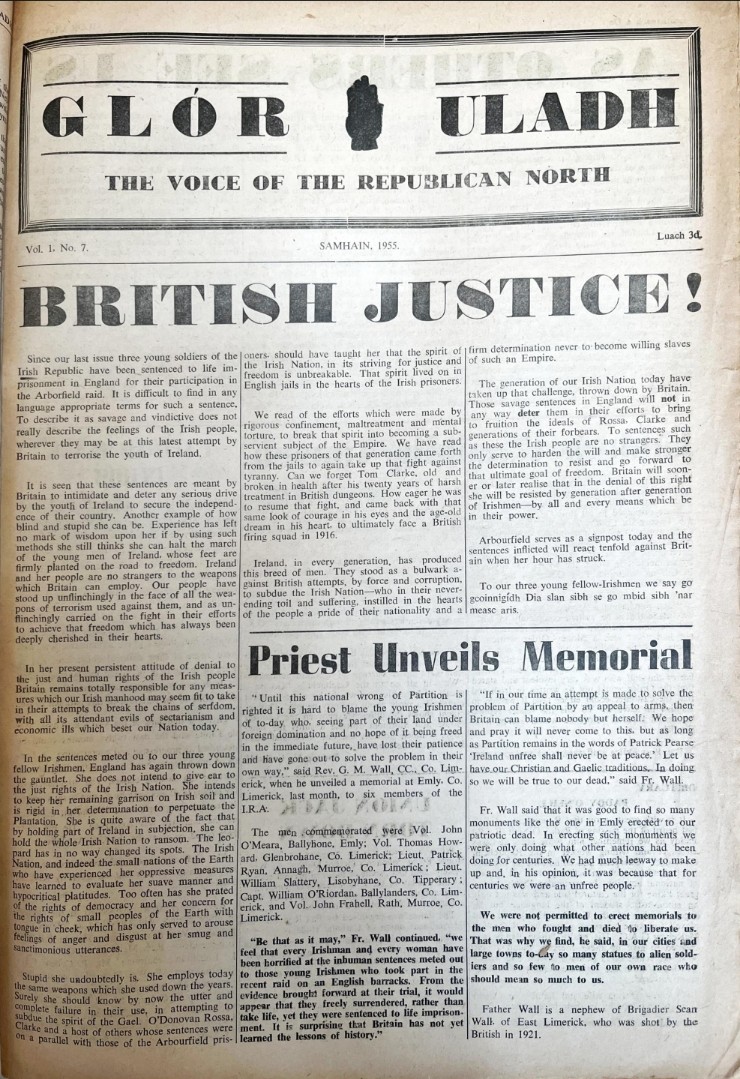

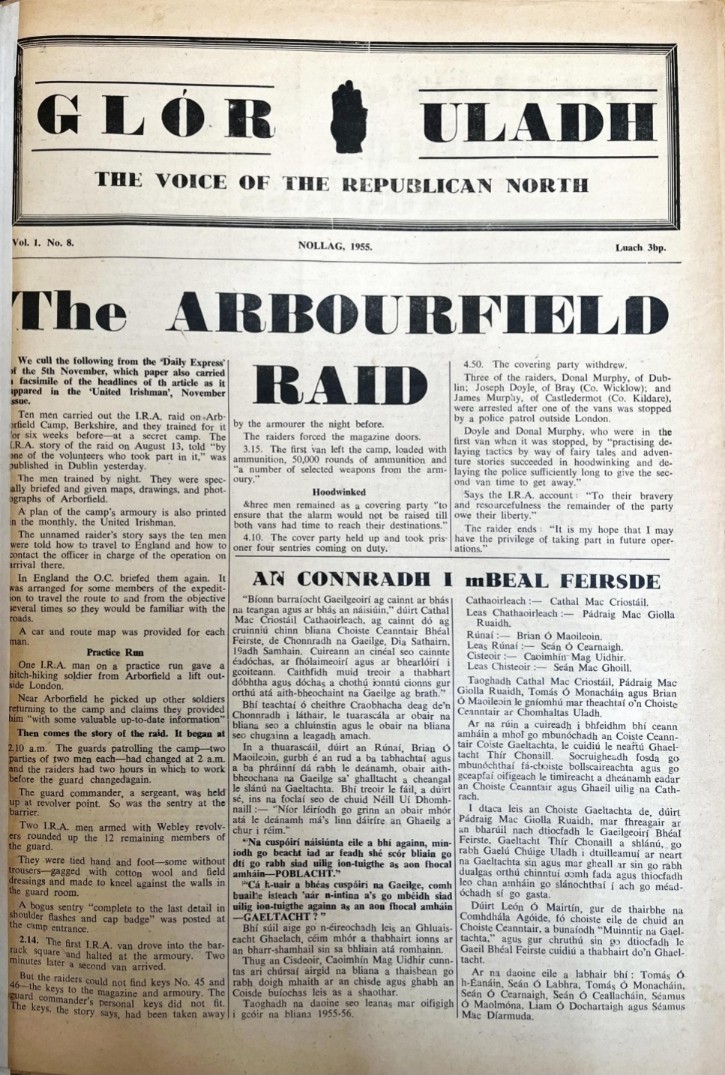
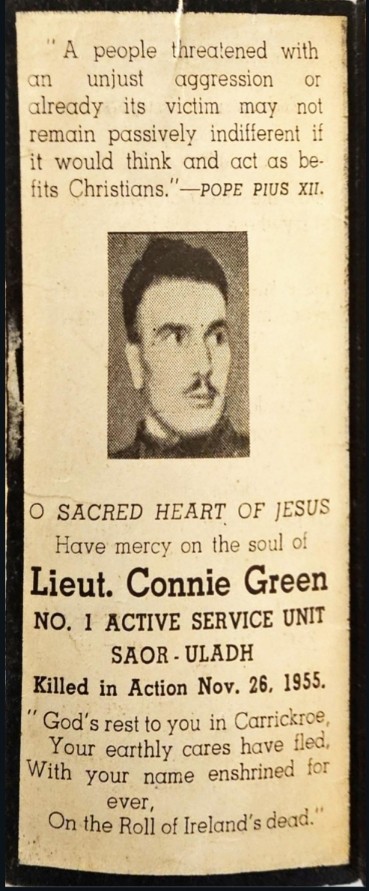
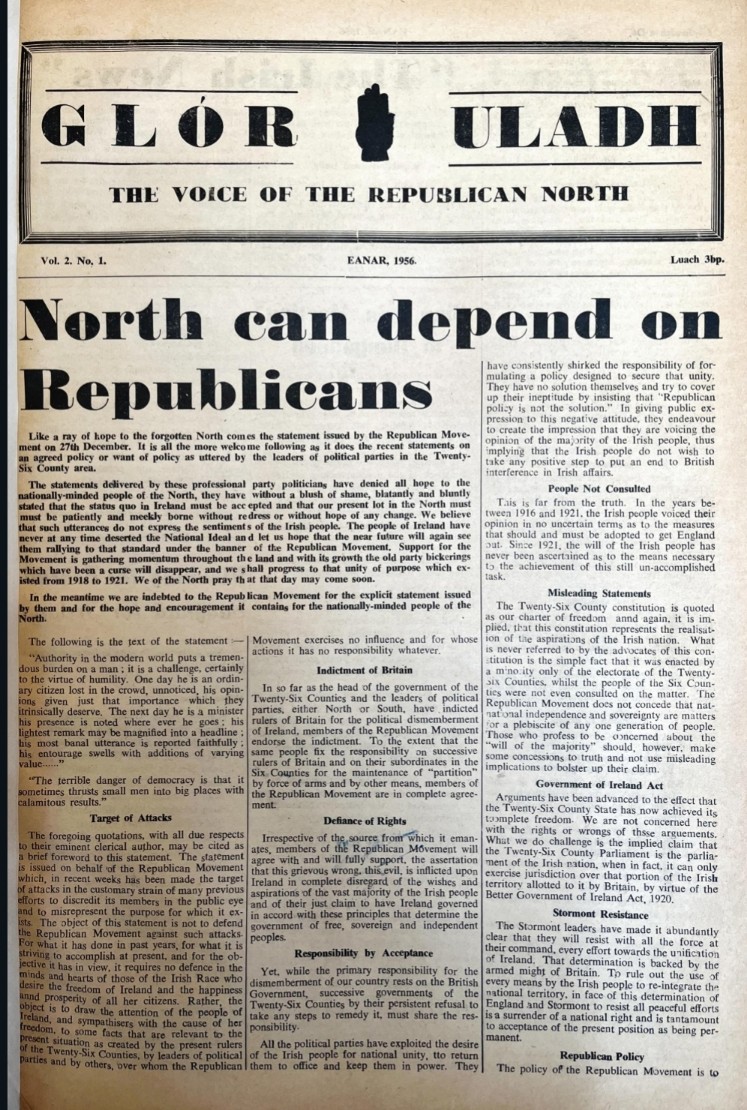
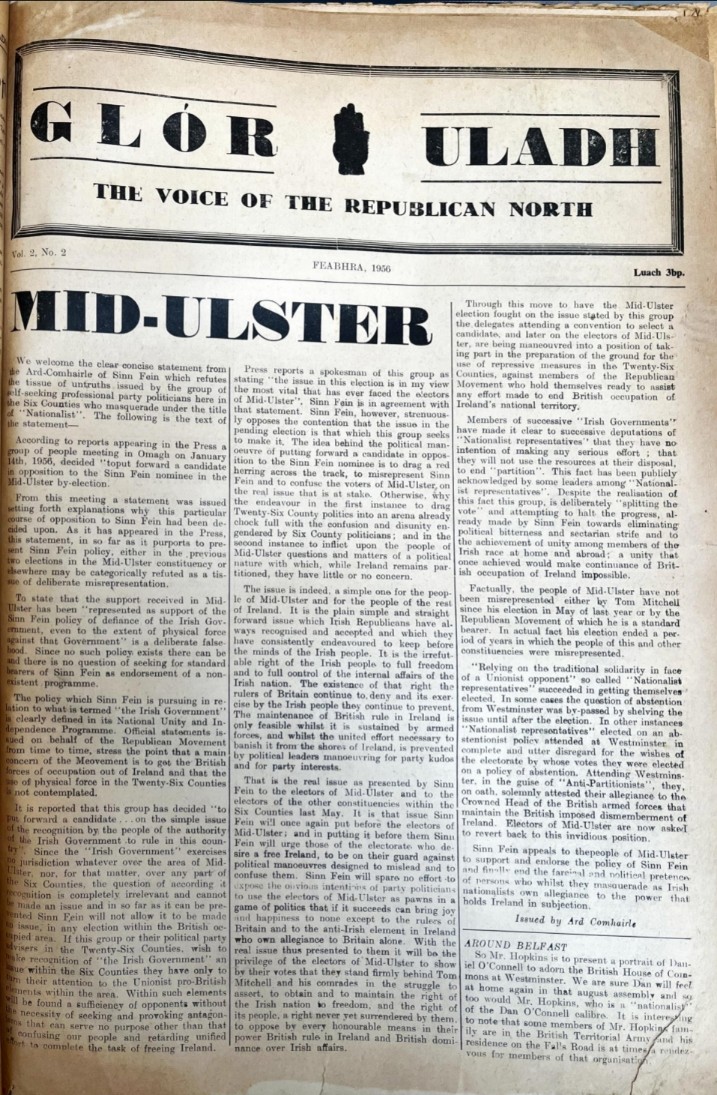
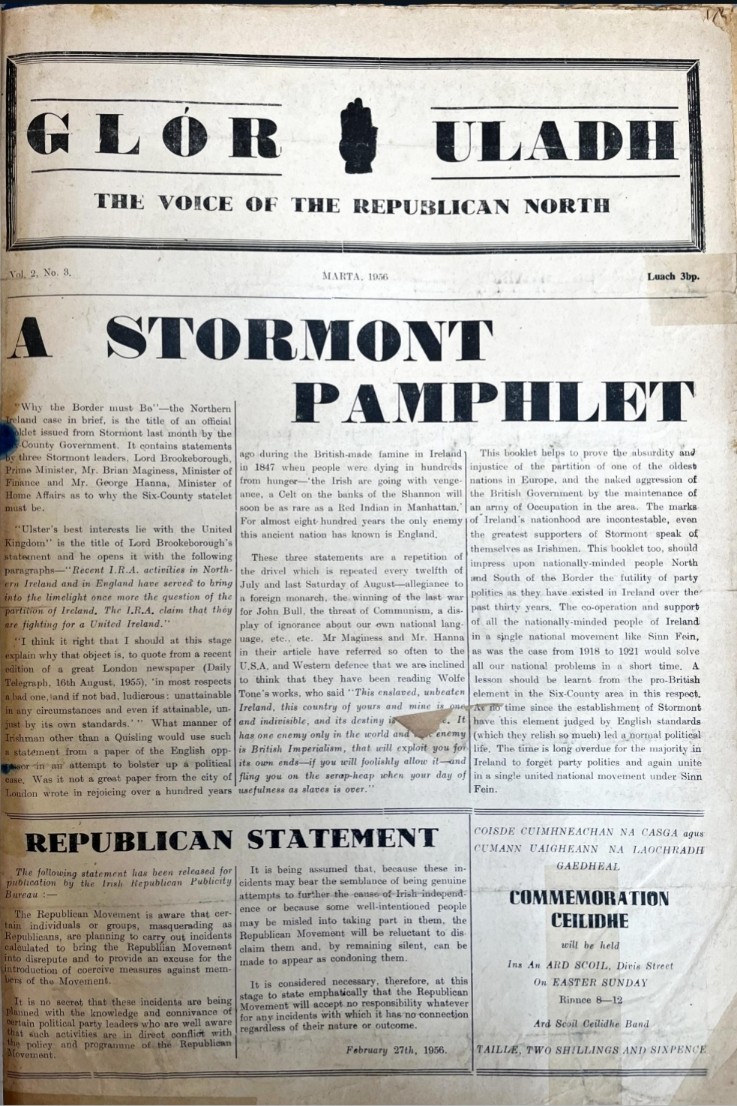
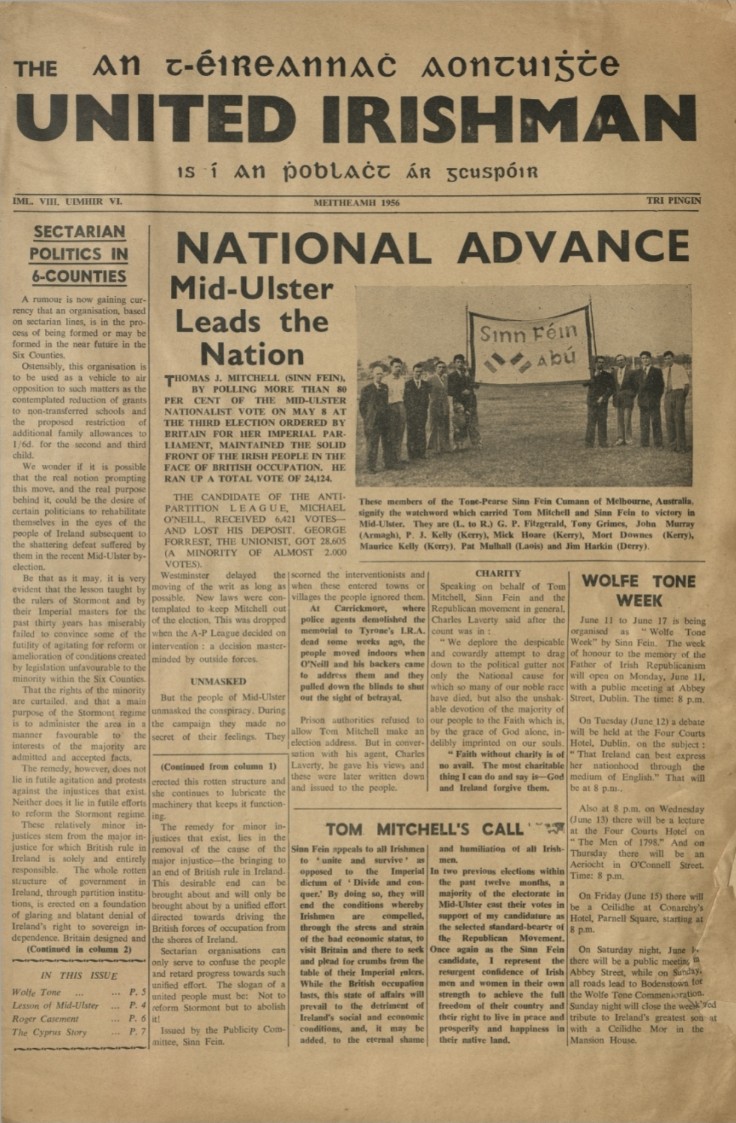
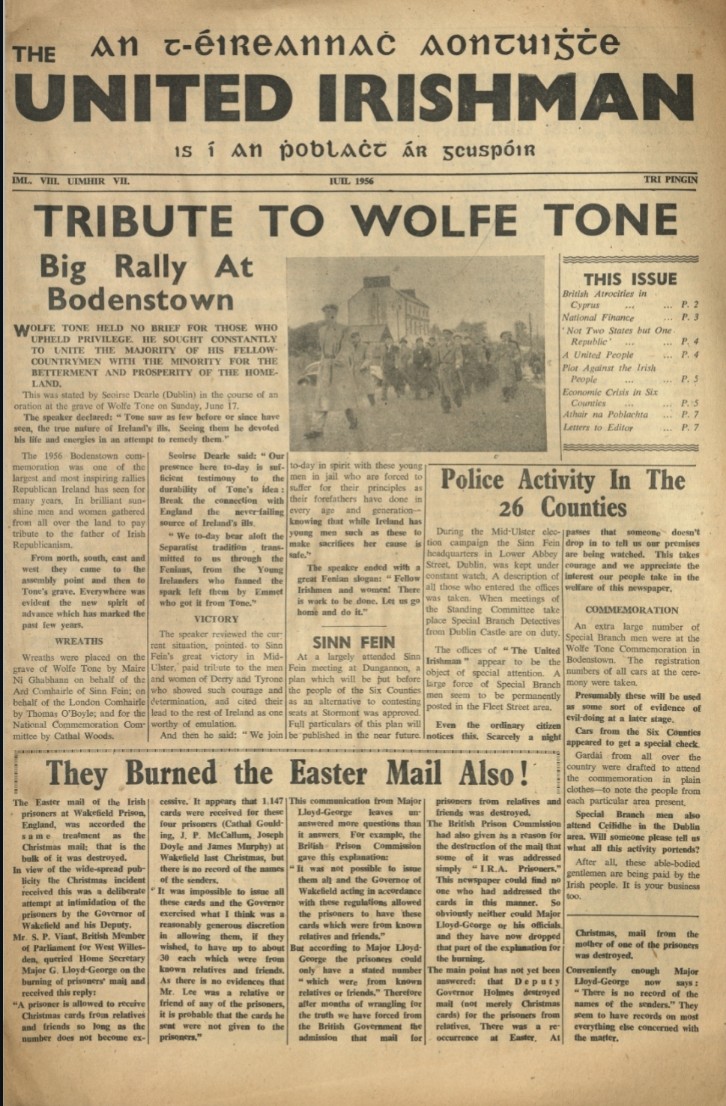
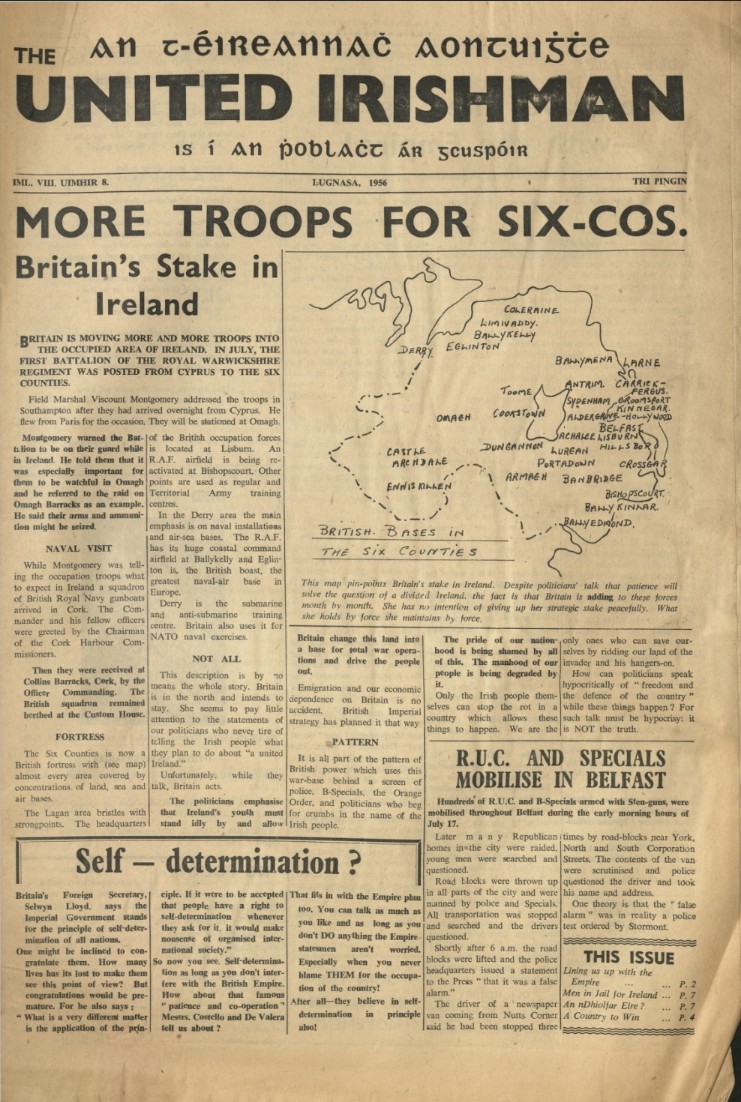
1956
On 12 December, the campaign was launched with simultaneous attacks by around 150 IRA members on targets on the Border in the early hours. A BBC relay transmitter was bombed in Derry, a courthouse was burned in Magherafelt by a unit led by an 18-year-old Seamus Costello, as was a B-Specials post near Newry and a half-built Army barracks at Enniskillen was blown up. A raid on Gough barracks in Armagh was beaten off after a brief exchange of fire.
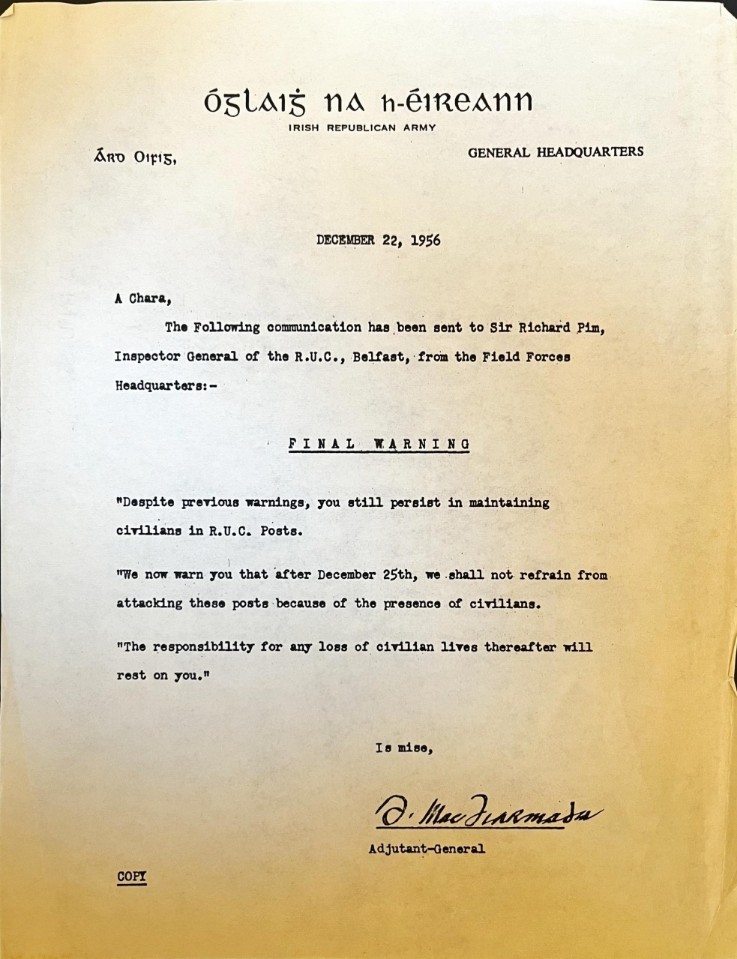
The IRA issued a statement announcing the start of the campaign, “Spearheaded by Ireland’s freedom fighters, our people have carried the fight to the enemy…Out of this national liberation struggle a new Ireland will emerge, upright and free. In that new Ireland, we shall build a country fit for all our people to live in. That then is our aim: an independent, united, democratic Irish Republic. For this we shall fight until the invader is driven from our soil and victory is ours”.
On 14 December: an IRA column under Seán Garland detonated four bombs (one of which blew in the front wall) outside Lisnaskea RUC station before raking it with gunfire. Further attacks on Derrylin and Roslea RUC barracks on the same day were beaten off. On 21 December: In response to the statement the government in the North under Basil Brooke used the Special Powers Act to intern several hundred republican suspects without trial.
On the evening of December 30, the Teeling Column under Noel Kavanagh attacked the Derrylin RUC barracks again, killing RUC constable John Scally, the first fatality of the campaign. Others involved in that attack included two prominent IRA men, Charlie Murphy and Ruairí Ó Brádaigh.


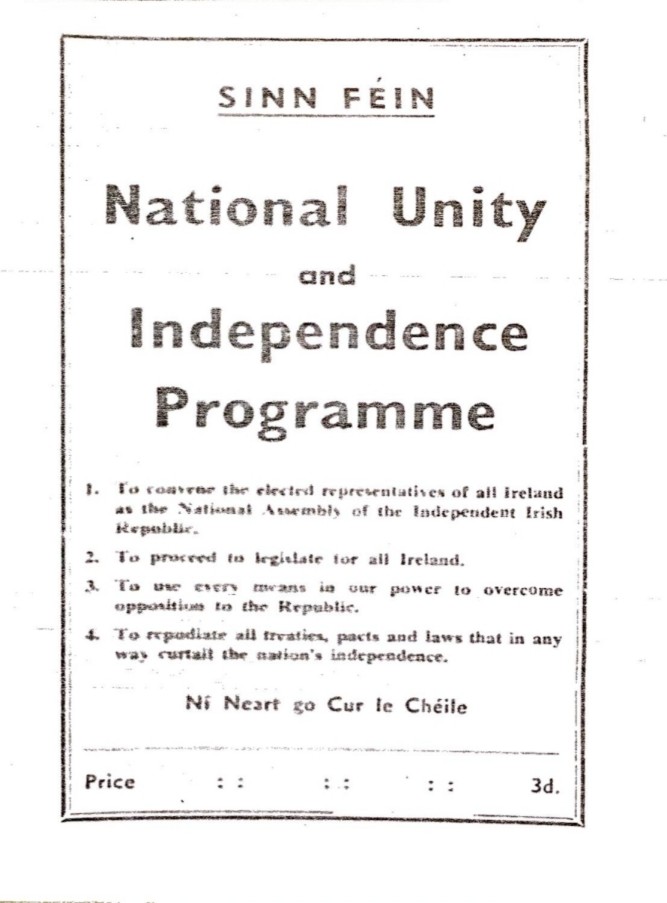


1957
The year 1957 was the most active year of the IRA’s campaign, with 341 incidents recorded.
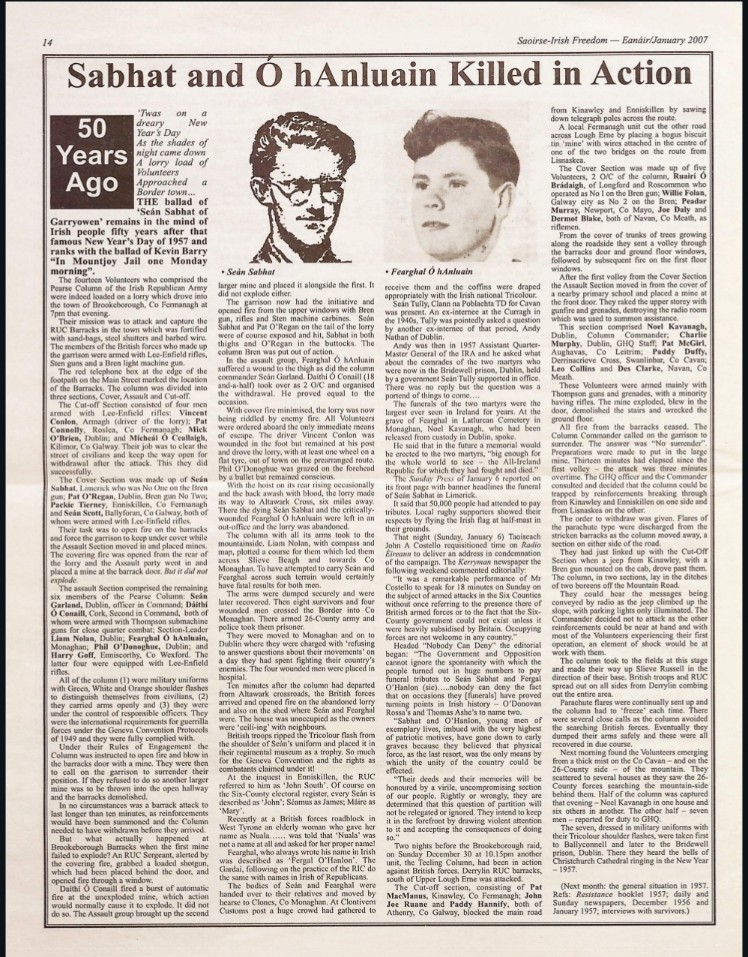
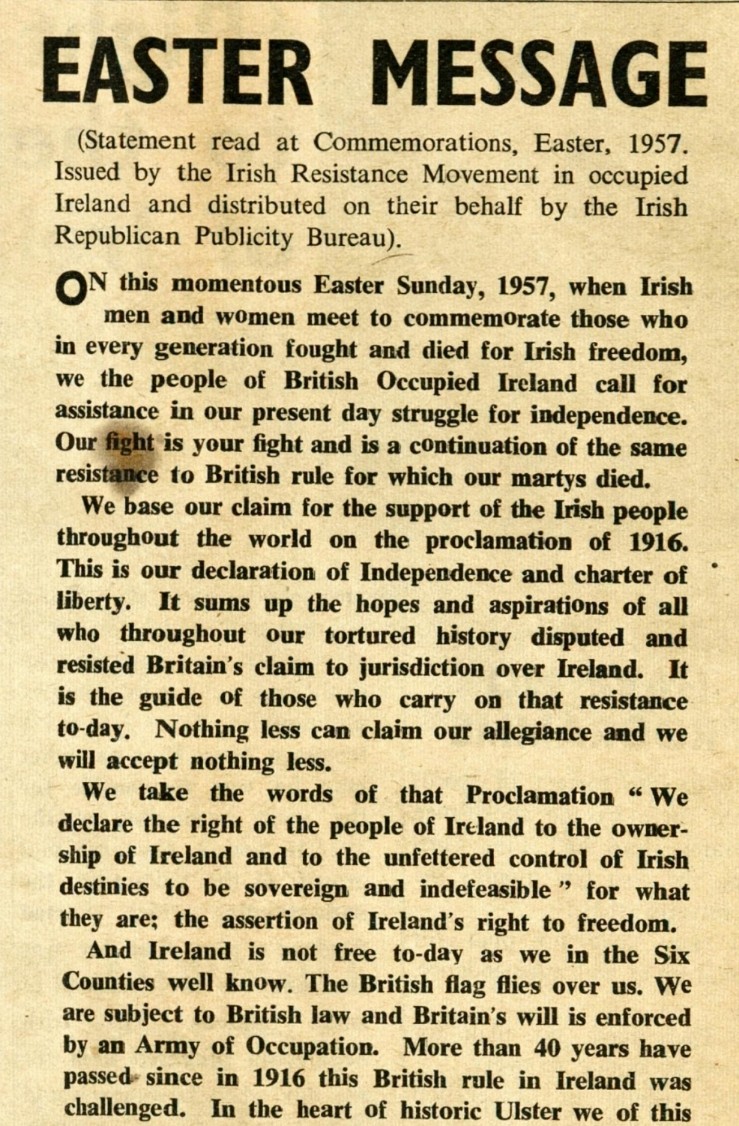
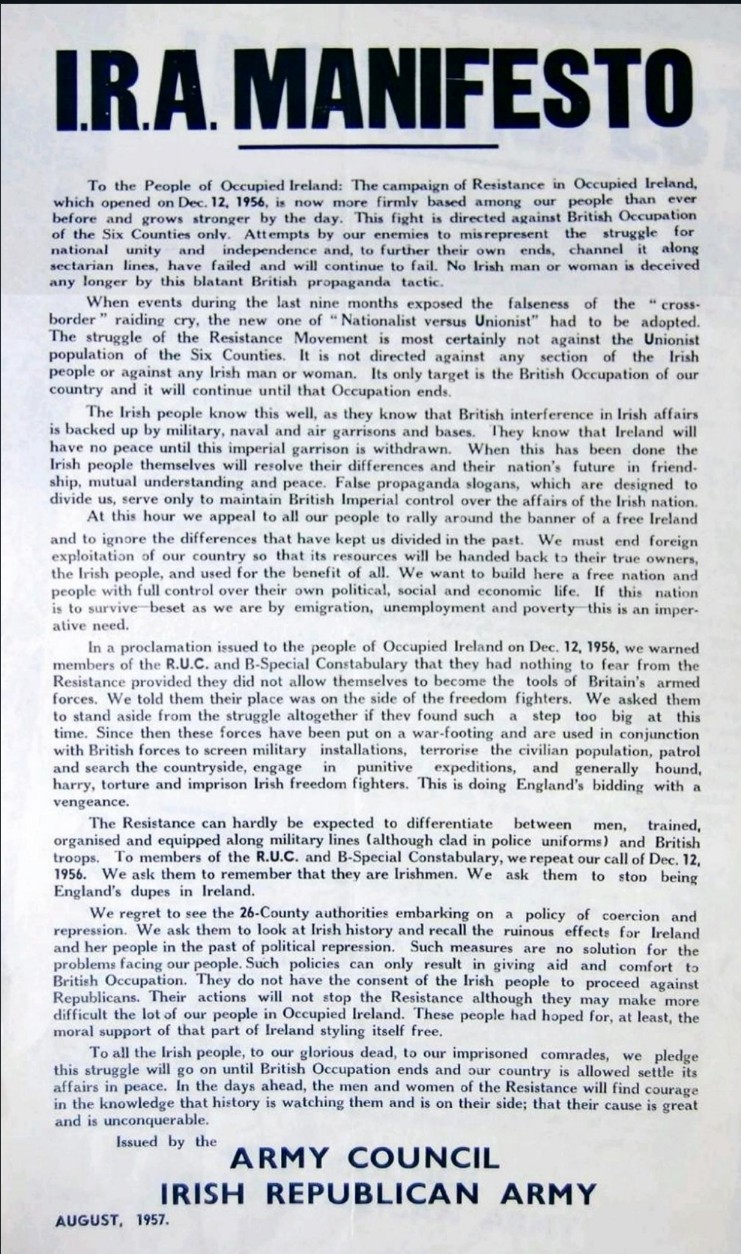
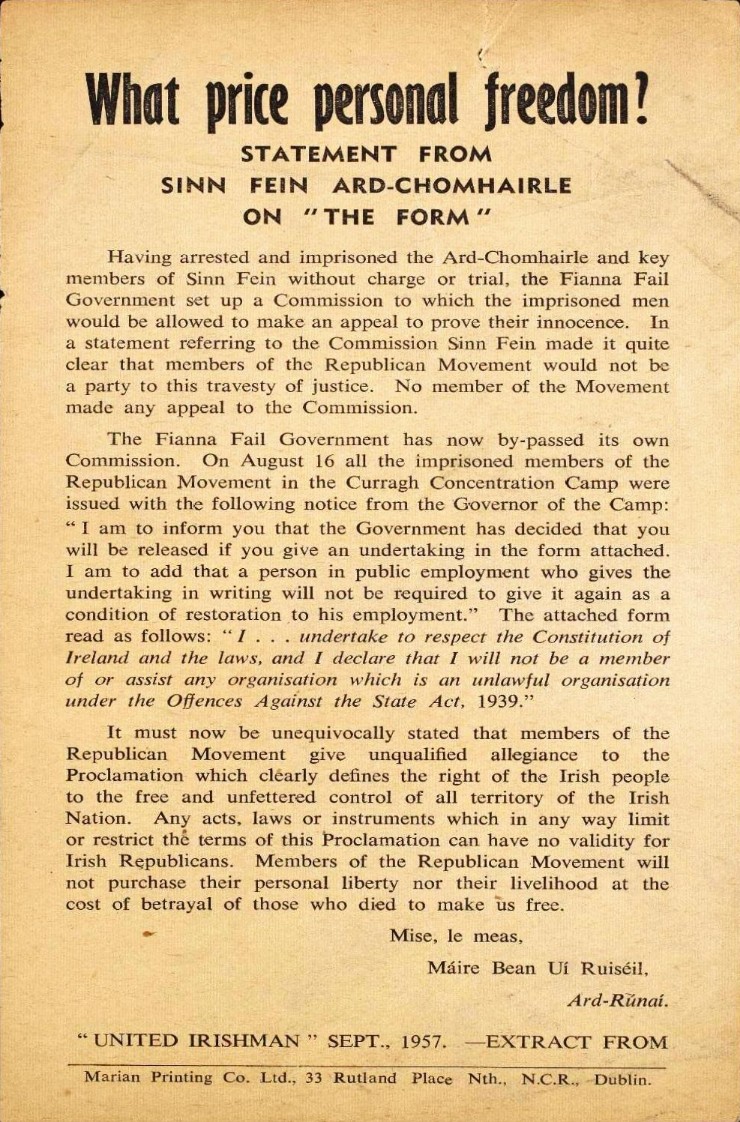
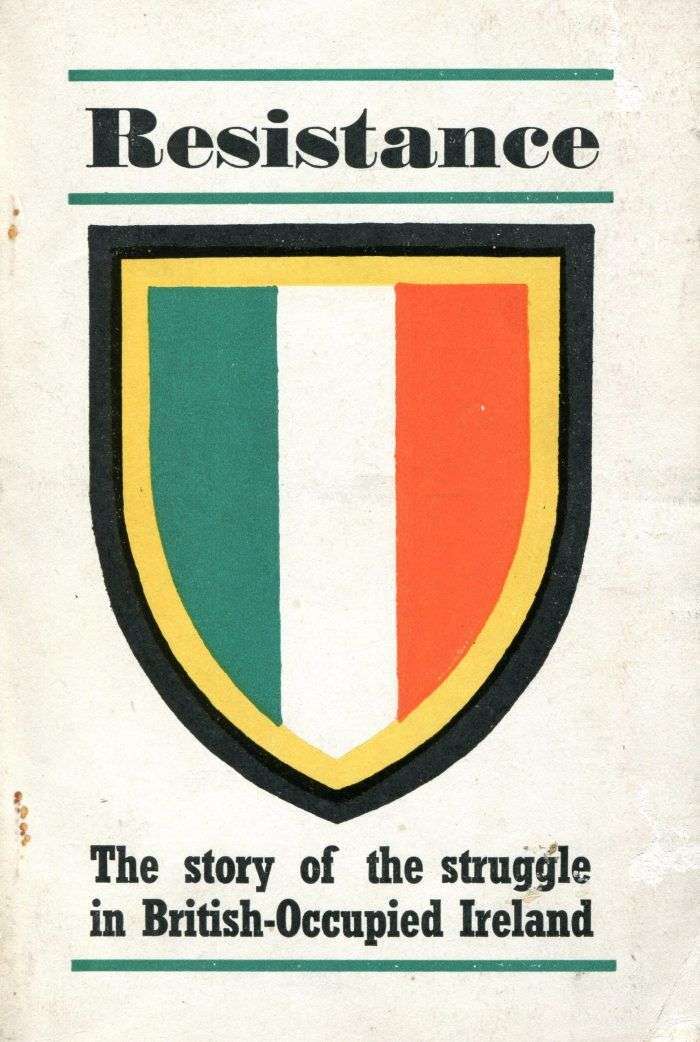


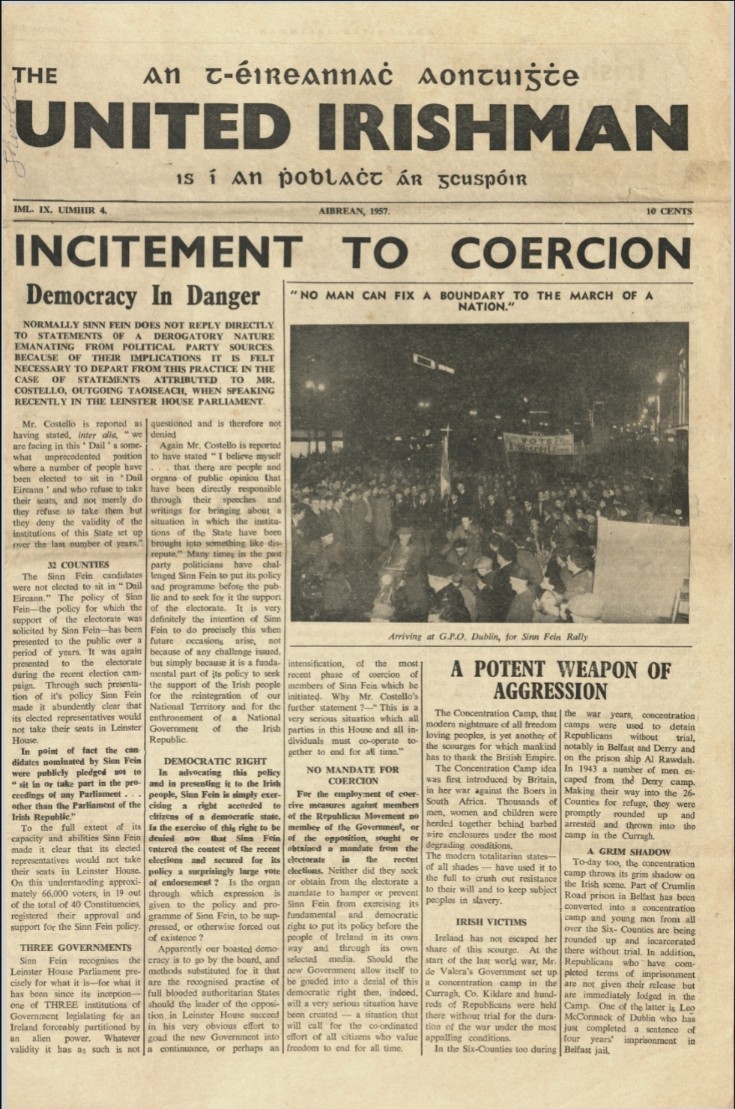

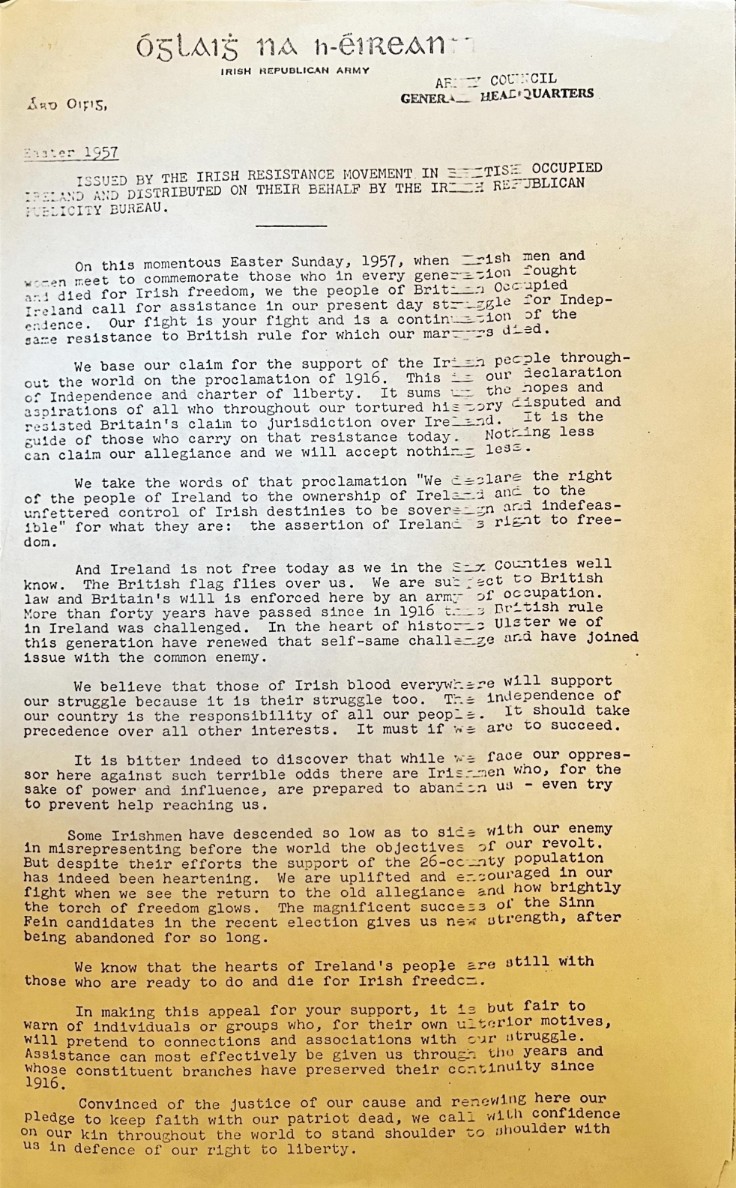
Brookeborough Attack
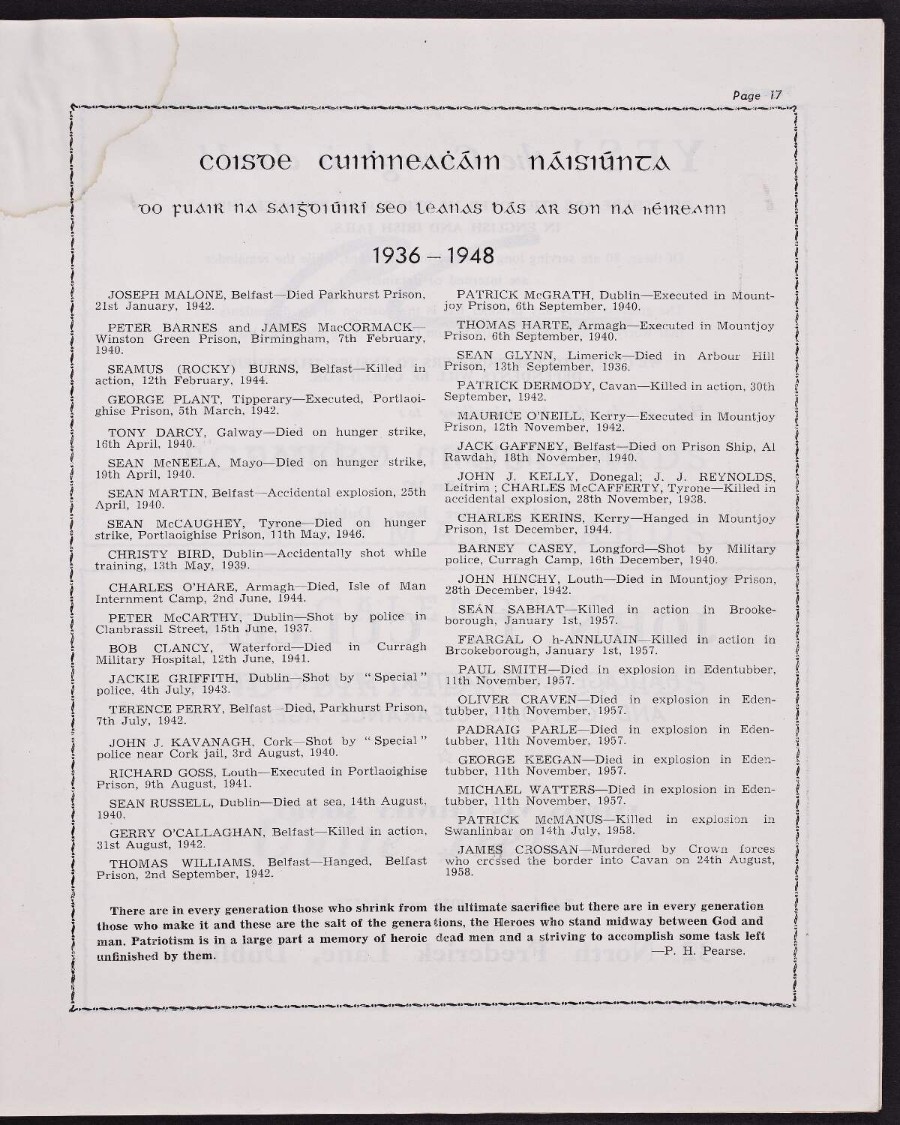
The most dramatic attack of the whole campaign took place on 1 January: 14 IRA volunteers, including Séan Garland, Alan O Brien, Paddy O’Regan and Dáithí Ó Conaill planned an attack on a joint RUC/B Specials barracks in Brookeborough, County Fermanagh. During the attack a number of volunteers were injured including Séan Garland. Fergal O’Hanlon and Seán South died of their wounds as they were making their escape.
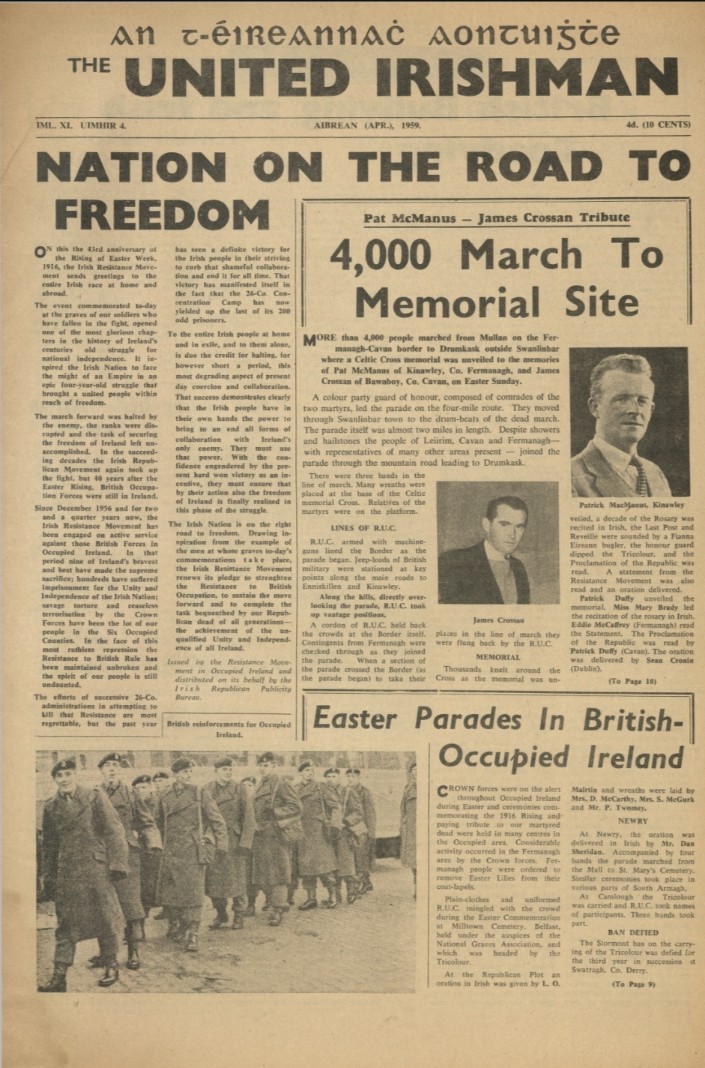
The remainder of the group were pursued back over the border by 400 RUC, B Specials and British soldiers. The funerals of South and O’Hanlon in the Republic produced a strong emotional reaction among the general public there. The two men are still considered martyrs in Irish Republican circles. Up to 50,000 people attended their funerals.
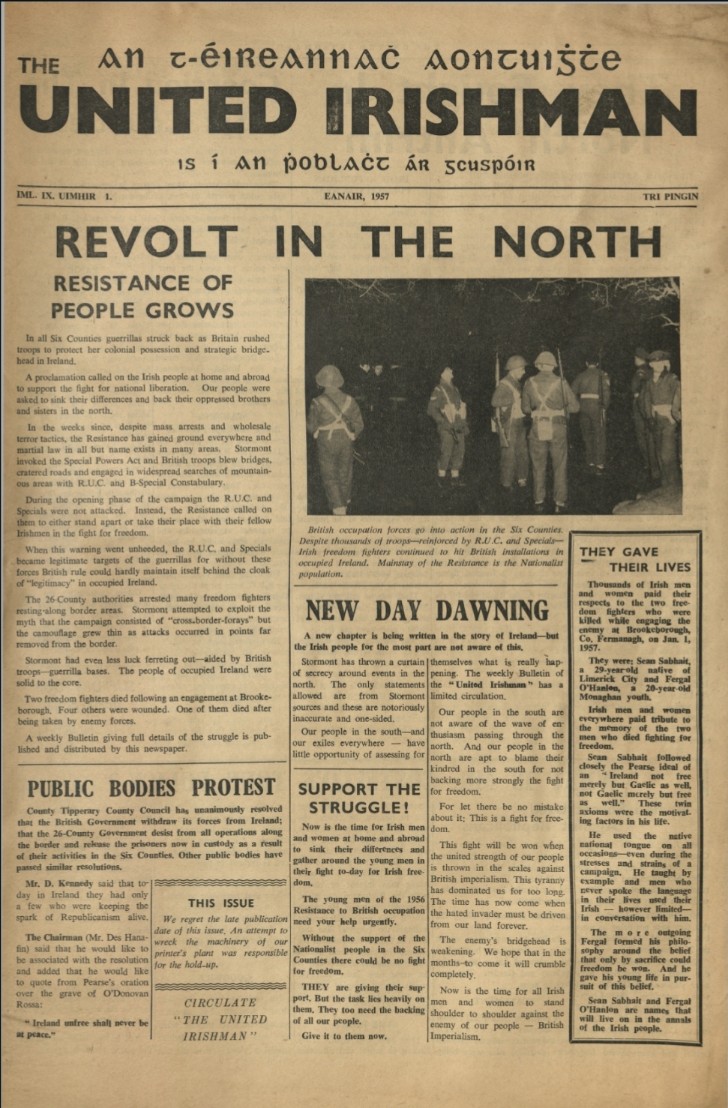 The Deaths of South and O’Hanlon (January) | 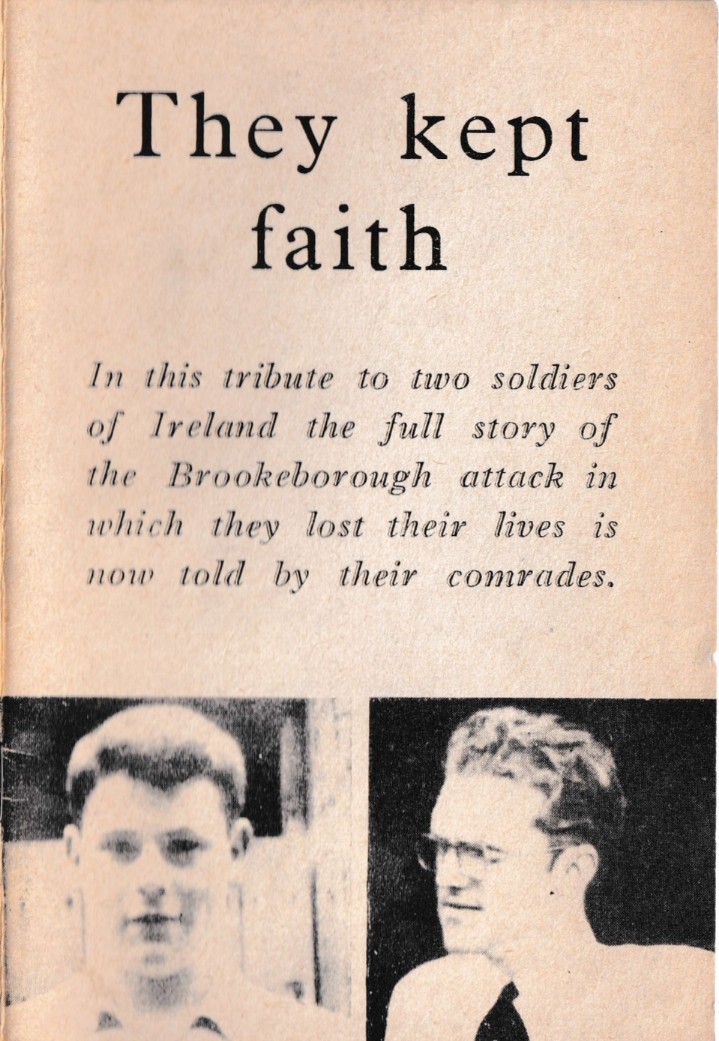 They Kept Faith Booklet (3) |  Seán South Memorial Card |
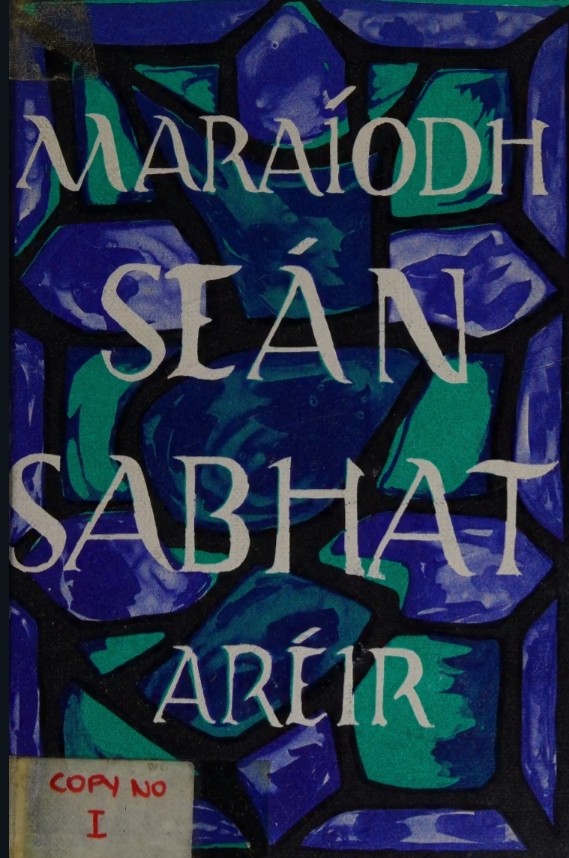 Maraíodh Seán Sabhat |  A first-hand account of the IRA Border Campaign – Sean Garland |
Edentubber
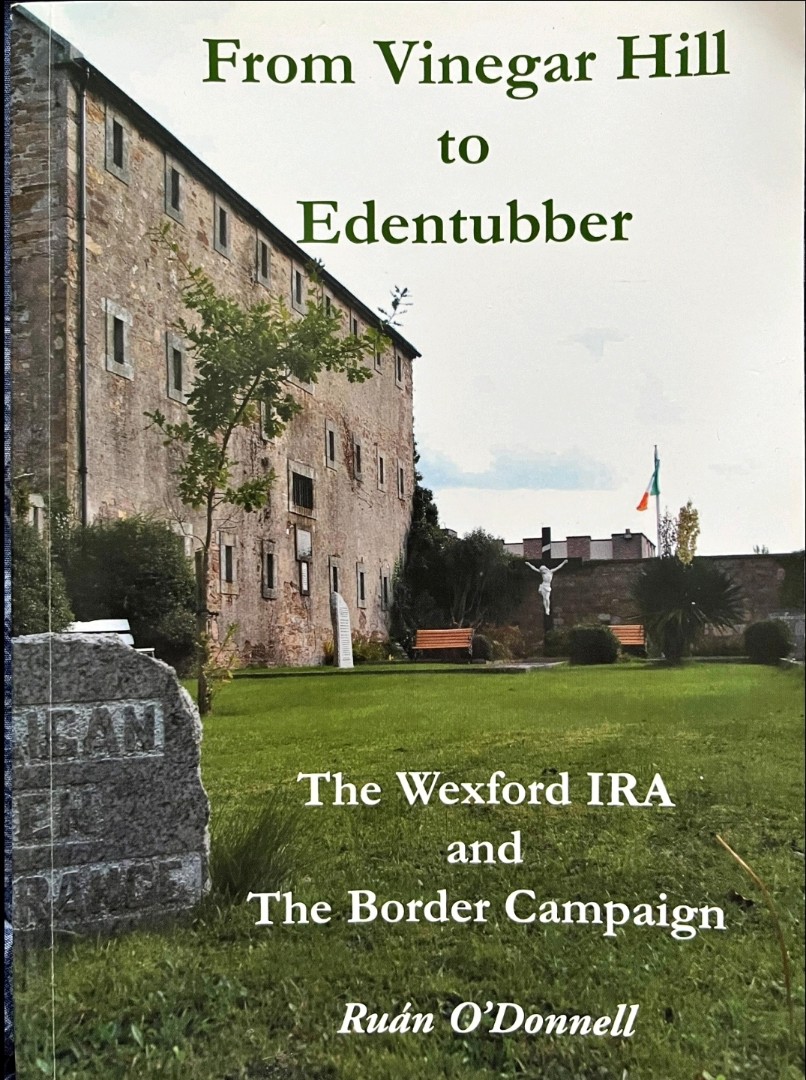
On 11 November: The IRA suffered its worst loss of life in the period when four of its members died preparing a bomb in a farm house at Edentubber, County Louth, which exploded prematurely. The civilian owner of the house was also killed. It is believed they were going to attack an empty customs post and electricity pylons in the North. They would later be referred to by republicans as the “Edentubber Martyrs”.
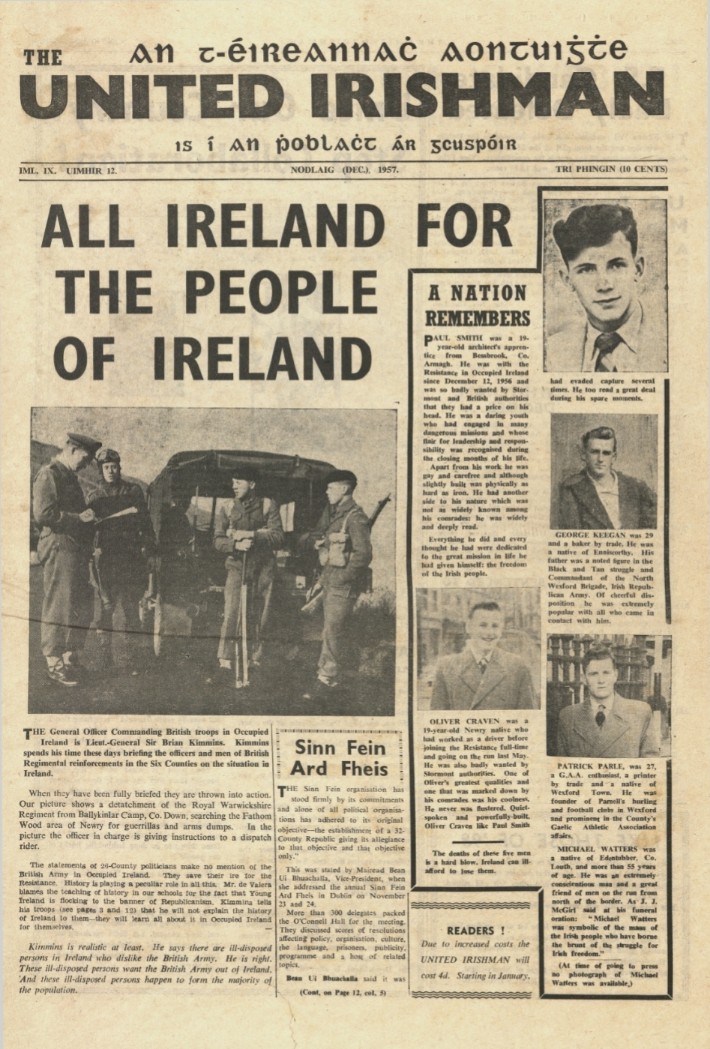 The Deaths of the Edentubber Martyrs | 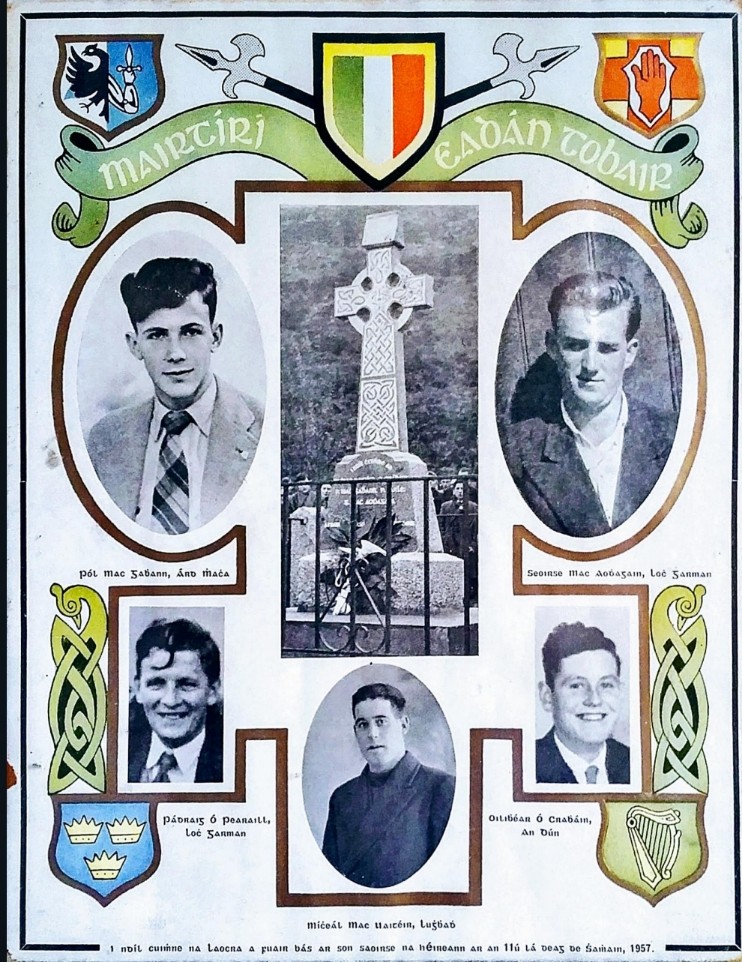 Edentubber Martyrs Poster | 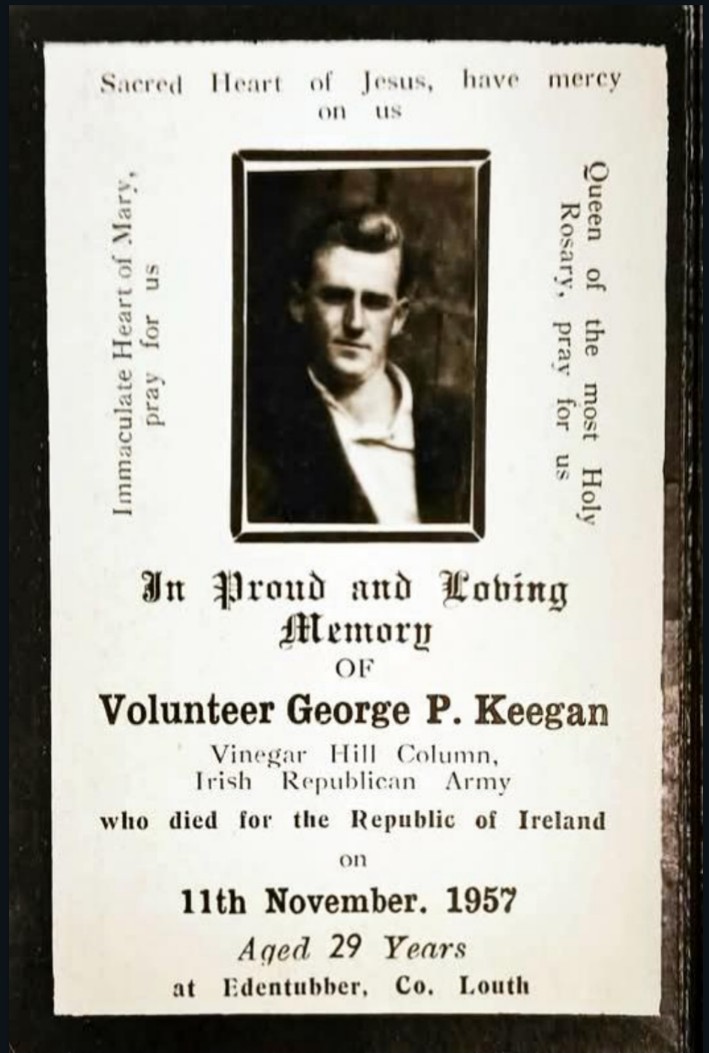 Volunteer George Keegan Memorial Card |
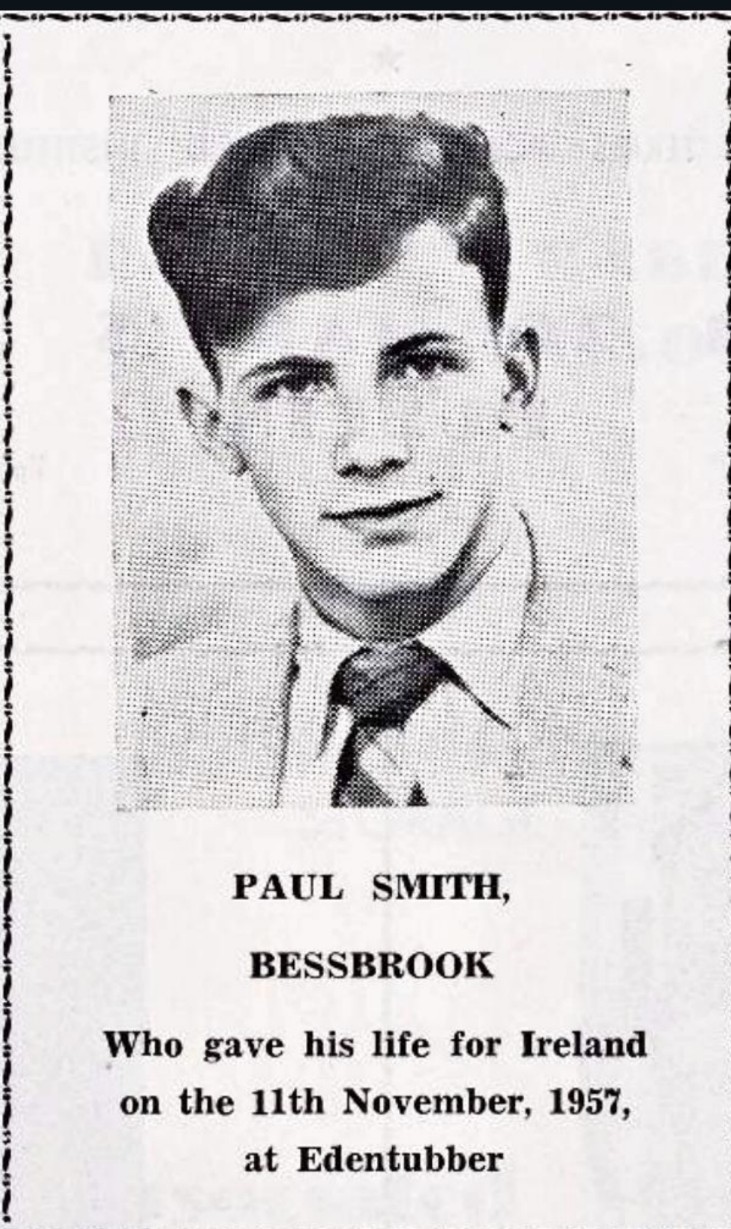 Paul Smith | 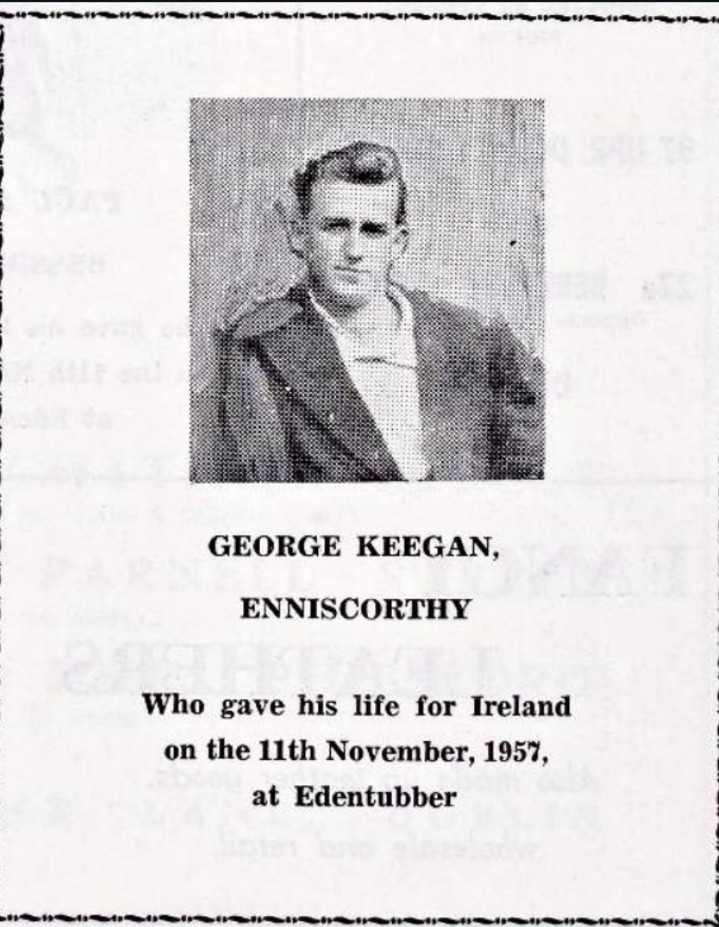 George Keegan |  Michael Watters |
 Oliver Creaven |  Padraig Parle |  Edentubber Poster (1998) |
1958
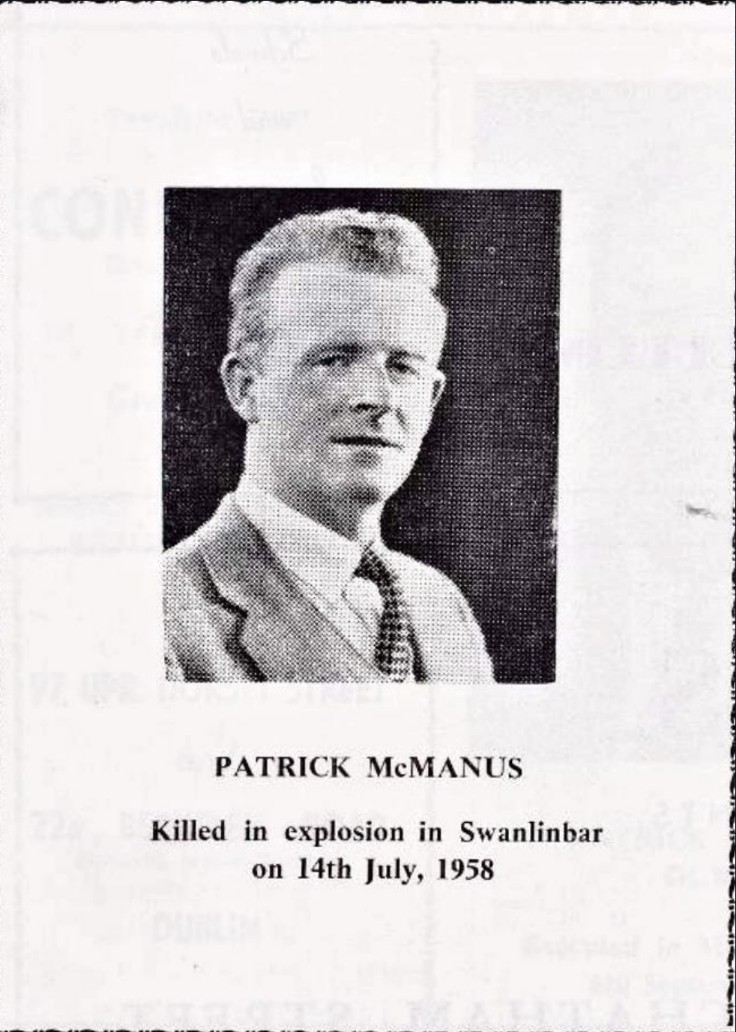
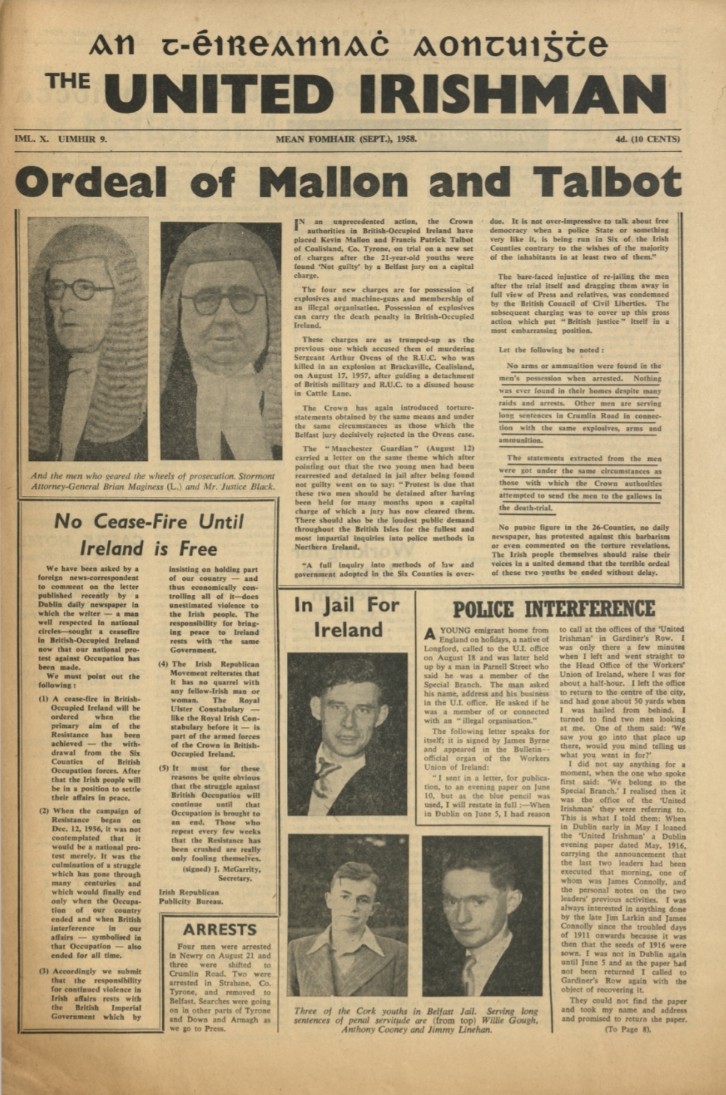
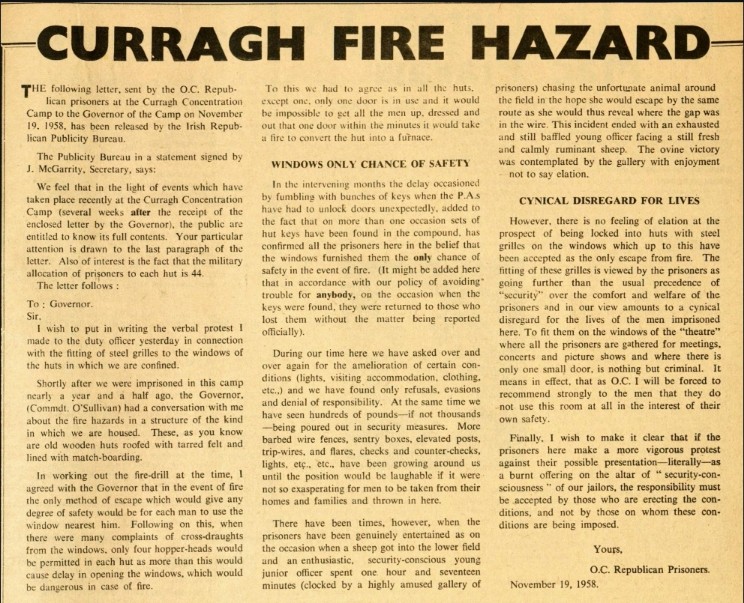
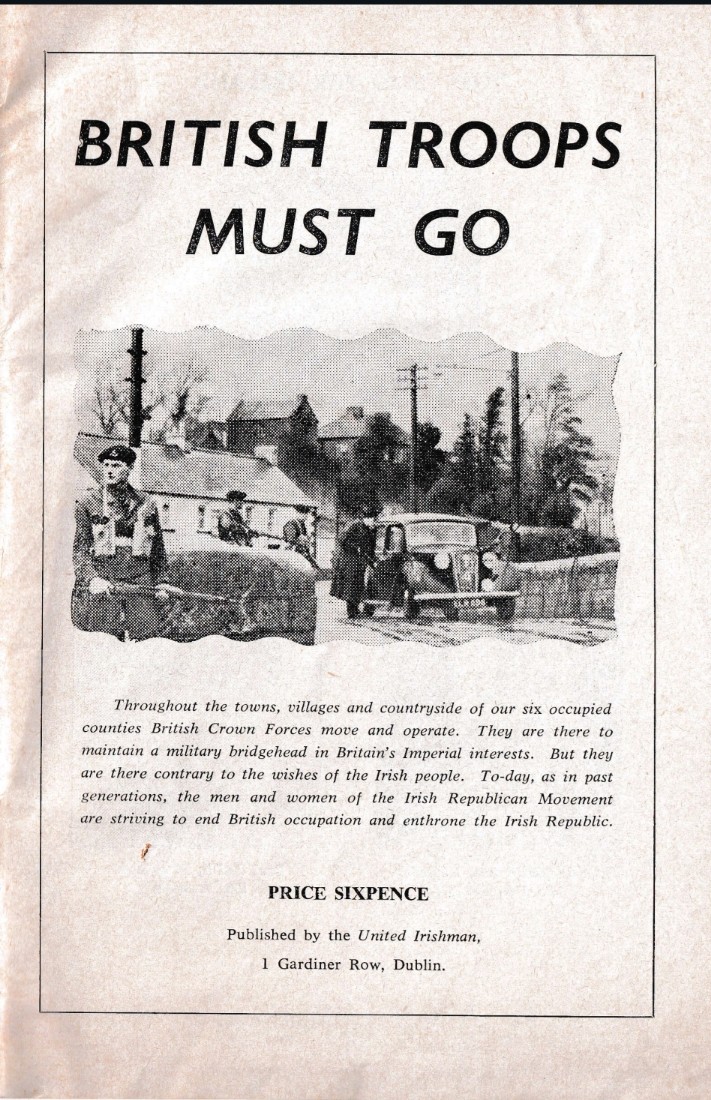
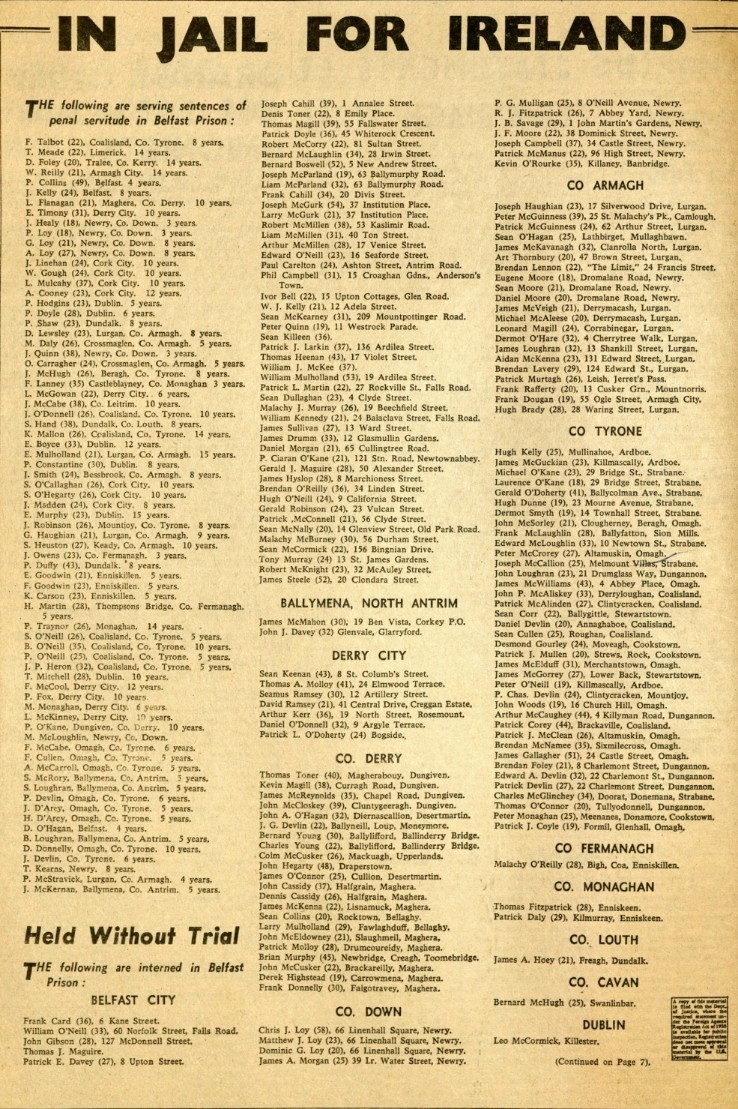
By 1958, the campaign’s initial impetus had largely dissipated. Certain IRA activities produced public hostility and by 1958, there were already many within the IRA in favour of calling the campaign off. The Cork IRA, for instance, had effectively withdrawn. By mid-1958, 500 republicans were in gaol or interned, North and South.
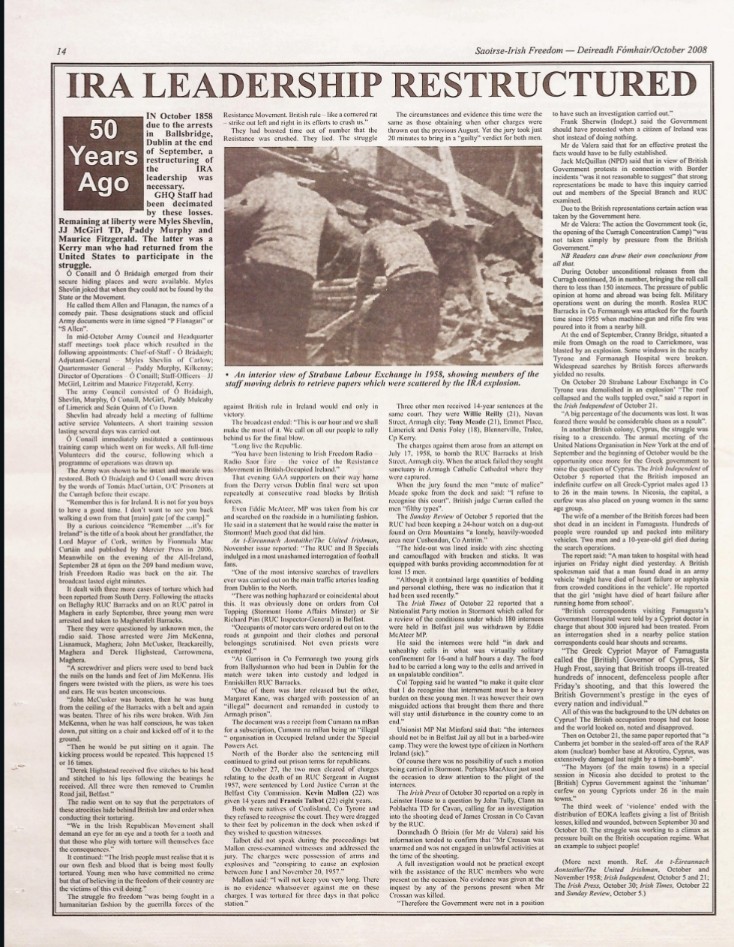


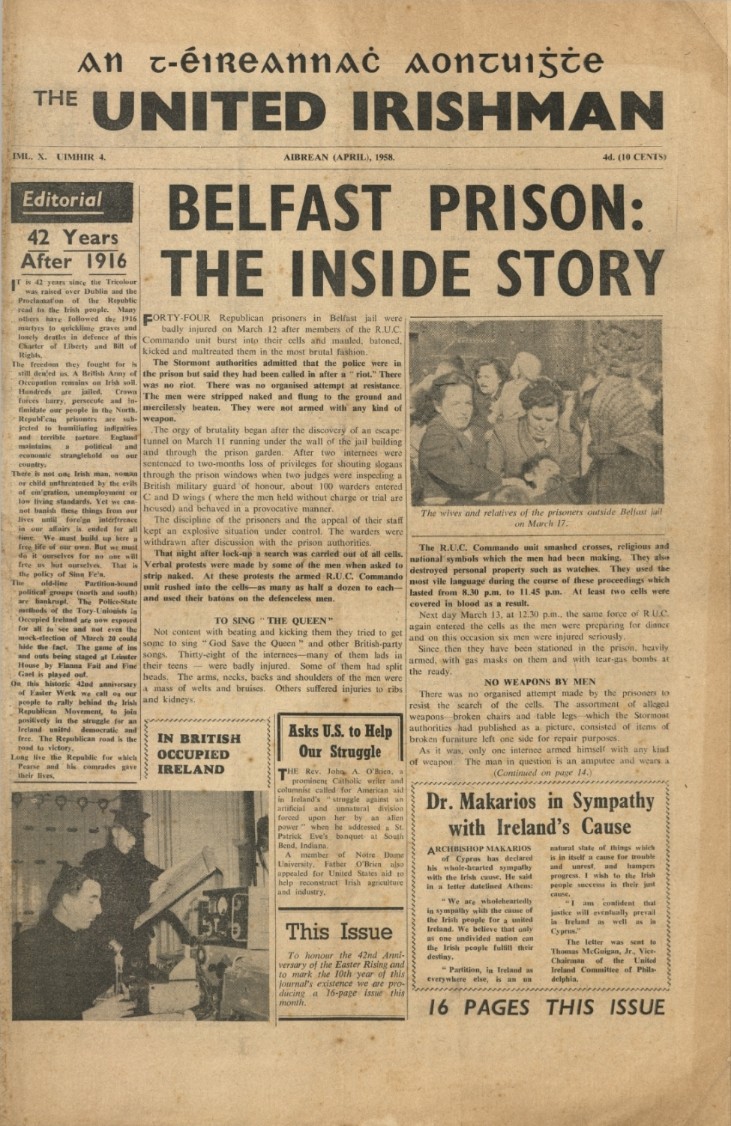




1959
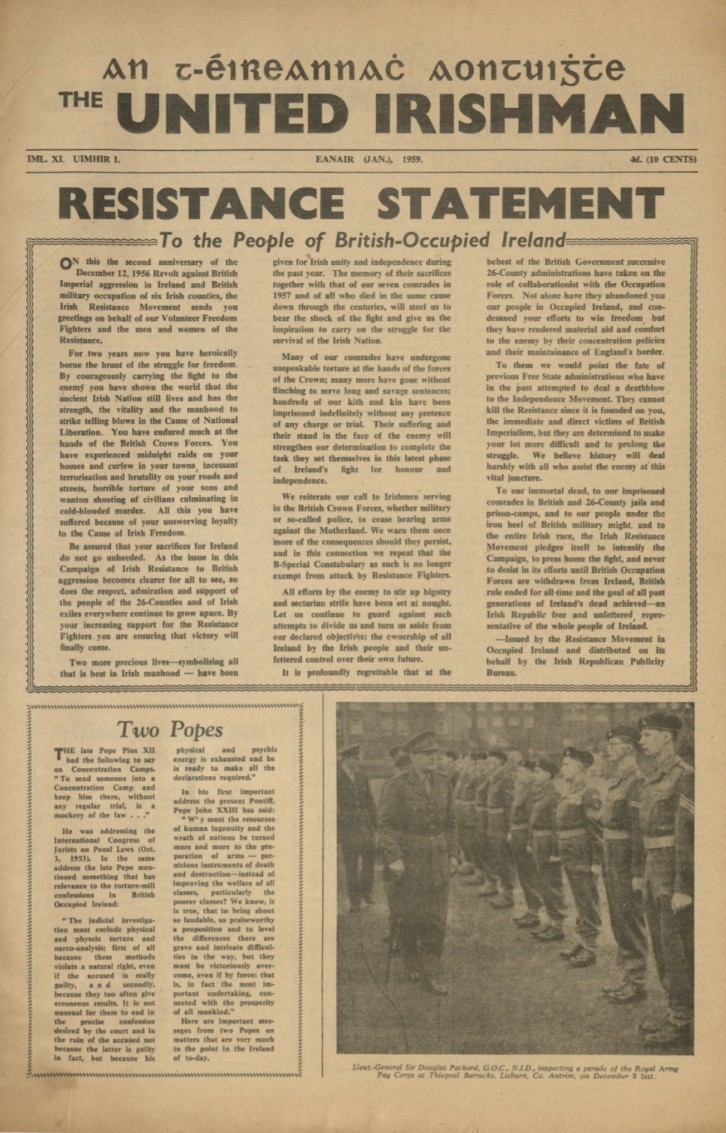
The decline in activity meant that the Fianna Fáil government in the South felt confident enough to end internment in March 1959. Following their release, some of the interned leaders met Sean Cronin in a farmhouse in County Laois and were persuaded to continue the campaign “to keep the flame alive”





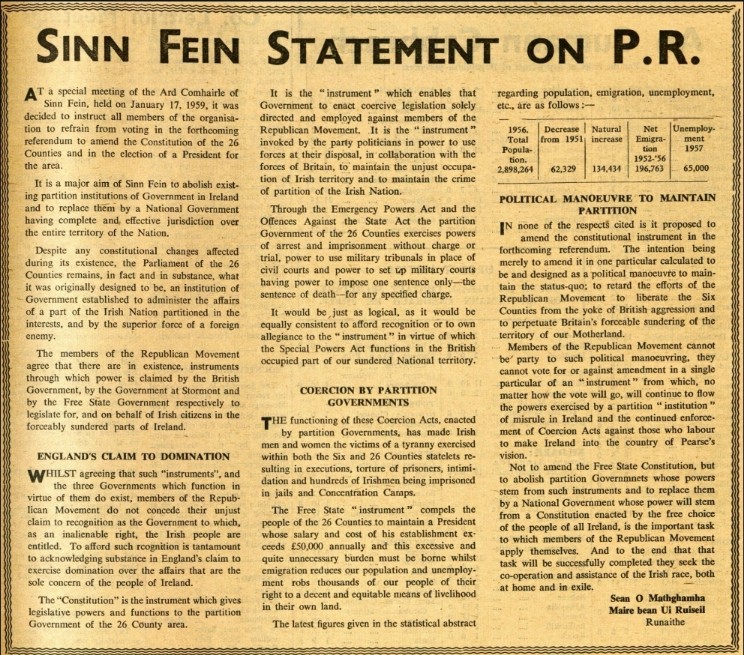


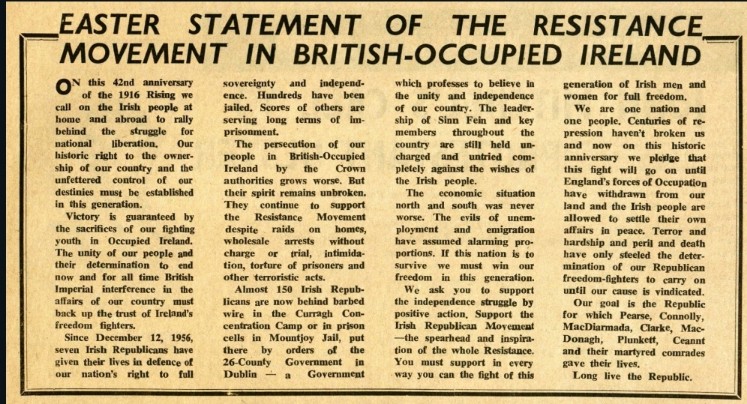
The campaign was officially called off on 26 February 1962. Implicit in the statement was a recognition that the IRA, after a promising start in 1957, had failed to mobilise much popular support behind its campaign.
Songs and Poems


Miscellaneous



(1) Donated by @irish_republican_archive
(2) Donated by Colum Ó Ruairc
(3) Donated by Brian Hanley.
(4) 50 Years Ago was a month by month history of the Republican Movement by Ruairí Ó Brádaigh which originally appeared in the RSF newspaper Saoirse. The series ran monthly for 25 years covering the history of Republicanism from 1938 until 1963.
(5) Donated by Txente Rekondo
© Irish Republican Digital Archive. Historical documents are presented for educational and research purposes only. We do not endorse or promote any views expressed in the material. Some content may be politically or historically sensitive. [Read full disclaimer]
Subscribe to our free newsletter here.
 The Irish Republican Digital Archive