Modern Irish republicanism is usually traced to the Society of United Irishmen, founded in Belfast and Dublin in 1791 by men who looked to the American and French revolutions for their model. What began as a reforming society pressing for parliamentary reform and Catholic emancipation hardened, under the pressure of war and repression, into a secret revolutionary organisation committed to an independent Irish republic. Its guiding idea, most closely associated with Theobald Wolfe Tone, was to “substitute the common name of Irishman in place of the denominations of Protestant, Catholic and Dissenter.” The aim was to unite a divided people behind a separatist project and, once constitutional means were closed off, to pursue that end by force and with French assistance.
The rising of 1798 was the result, and it was put down with great severity. Rebellion flared most fiercely in Wexford, where the insurgents held out until their defeat at Vinegar Hill, and in Antrim and Down, where the United Irishmen of the north rose under Henry Joy McCracken and Henry Munro; a French expedition landed in Mayo too late to turn the tide and was defeated at Ballinamuck. Tone himself was taken aboard a French ship off Donegal and died in Dublin awaiting execution. Tens of thousands were killed, the hoped-for union of creeds was strained by sectarian bloodshed, and within two years the Irish parliament was abolished by the Act of Union. The brief and ill-fated insurrection led by Robert Emmet in 1803 was the movement’s last gesture, a failure in the field but one redeemed in memory by the speech Emmet delivered from the dock before his execution.
Defeated by every practical measure, the United Irishmen nonetheless bequeathed to later generations the essential elements of the republican tradition: the demand for a sovereign, independent republic, the appeal across sectarian lines, and a calendar of martyrs and commemorations that would be invoked for two centuries afterward. Much of the material gathered here reflects that long afterlife as well as the events themselves, from contemporary memoirs and early histories to the song books, centenary publications, and commemorative booklets through which 1798 was remembered, together with a transcription of the Rebellion Papers held in the National Archives of Ireland, among the most important surviving records of the period.
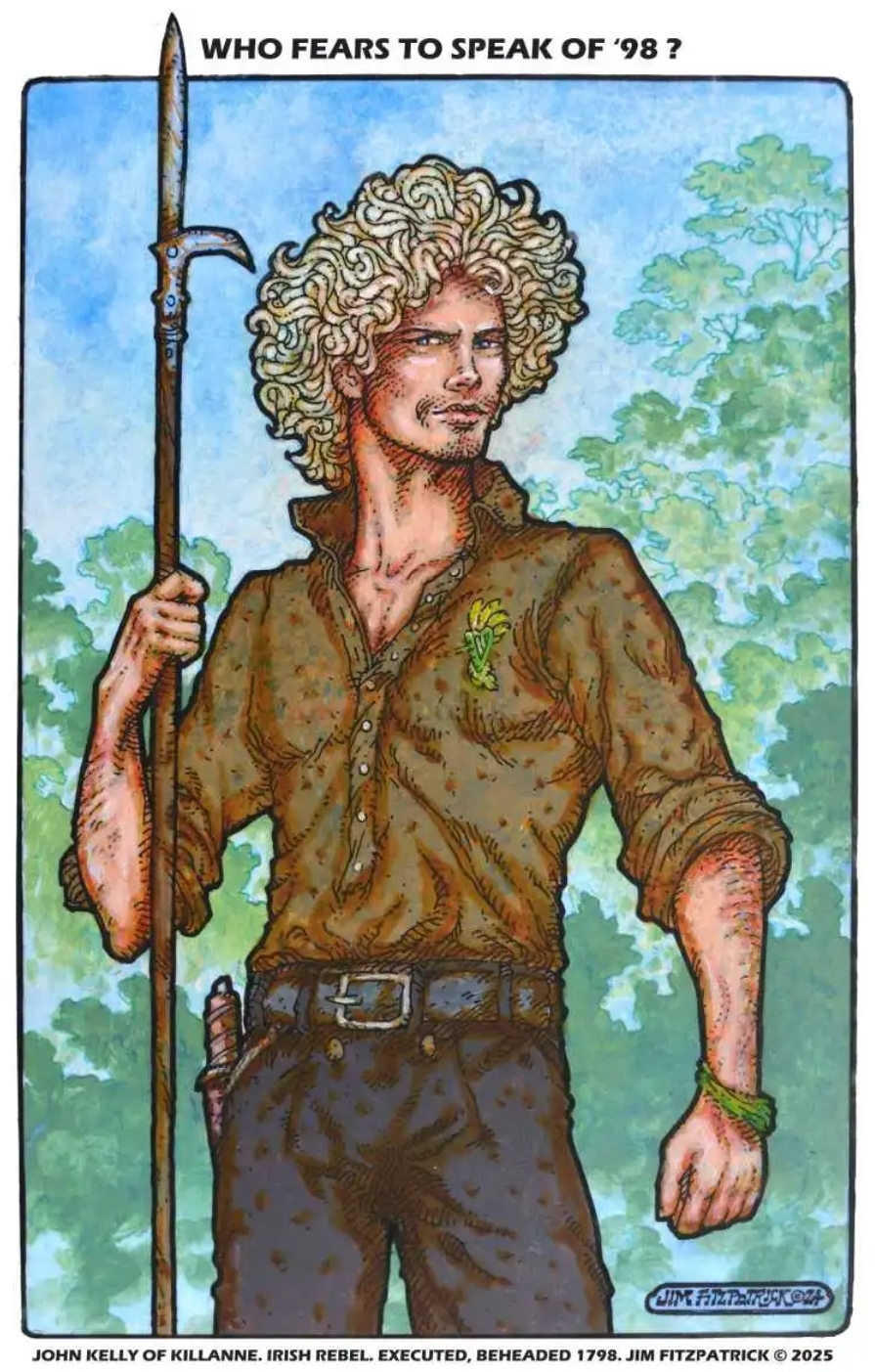
Thanks to Jim Fitzpatrick for donating the cover artwork for this section.
Memoirs


Pre 1960s


1960s

1970s


1980s
 Ballinamuck 1798 Commemorative Booklet (1983) |  Wolfe Tone and the Irish Nation by C. Desmond Greaves (1989) |  Westmeath 1798 (1987) |
1990s


2000s

Misc
 Wolfe Tone Speech from Dock |  1798 an’ a’ that |  The Battle of Baillinamuck |
 The Rising of 1798 and What it Means (1998) |  Dublin 98 Programme (1998) |
The 1798 Rebellion Papers

This document is a transcription of the valuable (1798) Rebellion Papers, held in the National Archives of Ireland. These papers, which were initially held at Dublin Castle, are amassed from various lists and correspondence from 1790 to 1808. They include many courts-martial records for much of the country (1798-1801), prisoner lists, petitions and a large quantity of literature from concerned loyalists, magistrates and landowners, from across Ireland, to the Chief Secretary’s Office. The collection is a valuable resource for historians and enthusiasts of the period, with much 1798 material destroyed during the Public Records Office explosion in 1922.


This is the first carton from a total of 67, giving a rough transcription of various correspondence between imprisoned United Irishmen and the Chief Secretary’s Office; a 1796 arrest warrant for Samuel Neilson and the Book of Suspects, which was an intelligence reference point on disaffected persons from across Britain, Ireland and on the continent.
The transcriptions, carried out by Colum Ó Ruairc of the 1798 Rebellion Casualty Database, contain reference footnotes to aid the reader about certain individuals, place-names and events during this turbulent period of Irish history.
Reference Tools


(1) Donated by Colum Ó Ruairc
© Irish Republican Digital Archive. Historical documents are presented for educational and research purposes only. We do not endorse or promote any views expressed in the material. Some content may be politically or historically sensitive. [Read full disclaimer]
Subscribe to our free newsletter here.