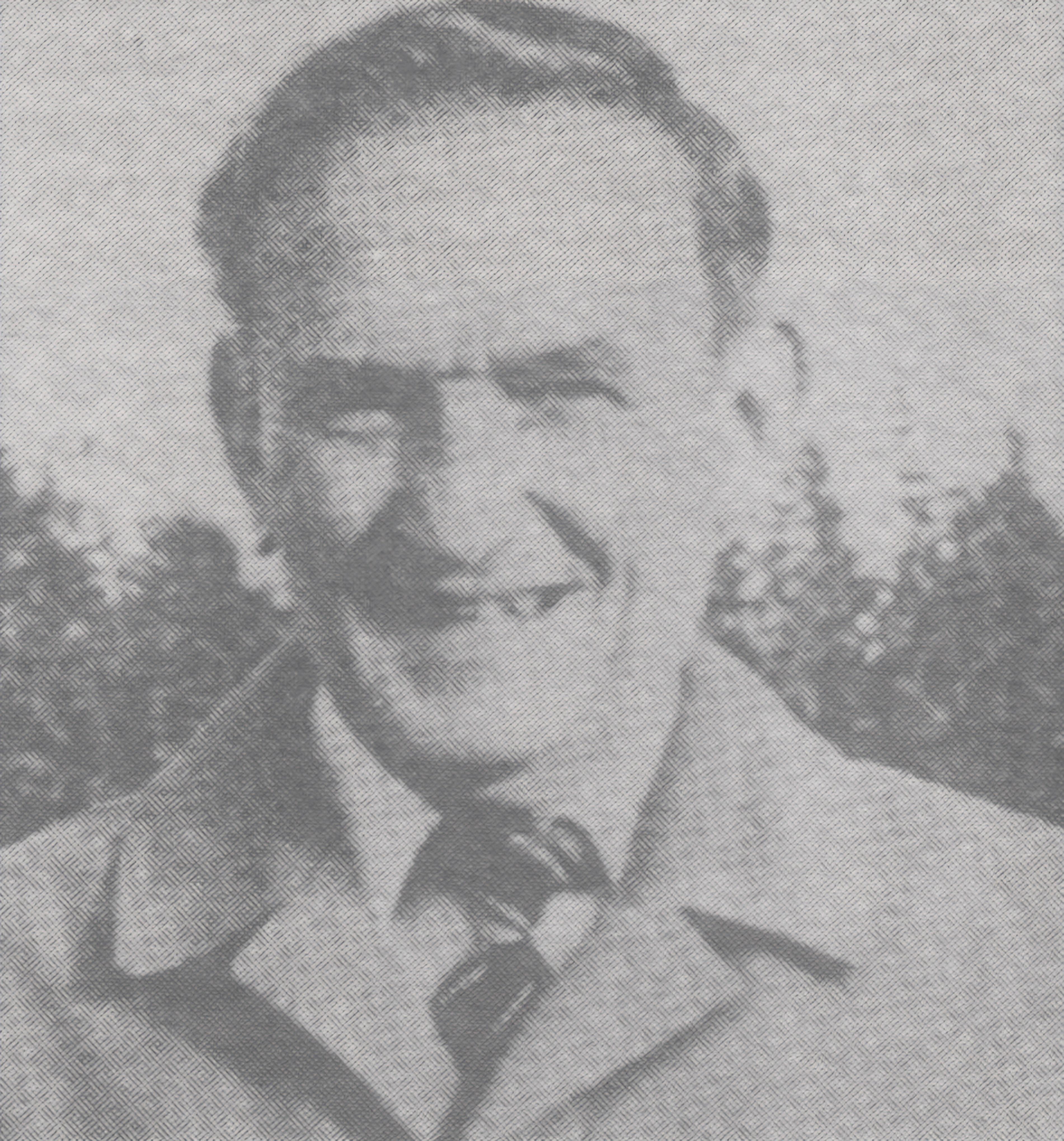
Born: 1916, Limerick
Died: 29 May 1990, Limerick
Buried: Mount St. Lawrence Cemetery, Limerick
Organisation: Na Fianna Éireann, IRA, Sinn Féin, Provisional IRA, Republican Sinn Féin
Role: OC Limerick; GHQ Staff; City Councillor; Member, first Provisional IRA Army Council
County: Limerick
Paddy Mulcahy, an IRA veteran from Limerick, served as one of the seven founding members of the Provisional IRA Army Council in December 1969. Born in 1916 into a republican family, he joined Na Fianna Éireann at the age of ten and the IRA at seventeen, and remained active in the republican movement without interruption until his death in May 1990. By occupation an insurance agent, he served as Officer Commanding the Limerick City unit of the IRA, as a member of GHQ staff, as a Sinn Féin City Corporation member, and as one of the small group who established the Provisional IRA at Athlone in December 1969.
Early life and republican formation. Mulcahy was born in Limerick in 1916 into what his obituary in Saoirse described as a strong Republican family. He joined Fianna Éireann in 1926, aged ten, and joined the IRA in 1933. In 1936 he was one of approximately 30 Limerick republicans jailed for defying the ban on the Wolfe Tone Commemoration at Bodenstown. Among those arrested on the same occasion was Seán Glynn, who died in Arbour Hill Prison.
Internment and post-war reorganisation. Mulcahy was interned in the Curragh from 1940 to 1943. On his release he assisted in re-organising the IRA in the Limerick area. By July 1955 he was listed as the named Limerick contact for the Republican Movement in the United Irishman, indicating he was the principal organiser in the city during the build-up to the Border Campaign. His address throughout this period was “Lisheen,” Dublin Road, Limerick.
Sinn Féin councillor and election candidate. In the June 1955 local elections Mulcahy won a seat on Limerick City Corporation for the Limerick East ward, one of seven Sinn Féin seats won nationally. By 1958 he was Parade Marshal at the Bodenstown commemoration, identified in the United Irishman of July 1958 as “Mr. Patrick Mulcahy, T.C., Limerick.” In 1957 he stood as the Sinn Féin candidate for Limerick East in the general election. By this period he was a member of the Ard Comhairle of Sinn Féin. In September 1961, in that capacity, he presided at a Sinn Féin convention in Nenagh which selected Tomás Mac Giolla as the North Tipperary candidate for the forthcoming general election. He also presided over Sinn Féin meetings in Limerick that month and was quoted on the Common Market question, describing the 26-County Assembly’s relationship to Britain as “still tied to the tail of ‘John Bull’.” In August 1966 the United Irishman reported that his non-participation in a vote at Limerick’s Mayoral election had been raised by Alderman D.B. O’Malley of Fianna Fáil. Mulcahy responded: “I have always believed in the principle of keeping politics outside the Council Chamber and on that account when a few opportunities came my way during the past year, I did not avail of them.”
Army Council and the Border Campaign. A Saoirse retrospective on October 1958 records the IRA Army Council of that period as consisting of Ó Brádaigh, Shevlin, Murphy, Ó Conaill, McGirl, Paddy Mulcahy of Limerick, and Seán Quinn of Co. Down — confirming his place at the heart of the movement’s leadership a full decade before the split. During the 1956–62 campaign he also served on the GHQ staff. When Des Long joined the Limerick City unit in August 1959, Mulcahy was OC of that unit. He subsequently passed command of Limerick City to a volunteer named Joe Quinn.
Arrest and imprisonment, 1961–1962. On 4 December 1961 Mulcahy’s home at “Lisheen,” Dublin Road, was raided by Gardaí. He and Tomás Ó Suilleabháin were removed to Collins Barracks, Dublin, and charged before the Military Court. He was charged with refusing to answer questions, possession of an incriminating document, and membership of an unlawful organisation. When asked by the court why he would not answer questions, he replied: “I have not committed any offence. It is being created for me.” He was sentenced to two years’ imprisonment by the Military Tribunal. Following a General Amnesty in April 1962 he was released from Mountjoy, and the United Irishman recorded his release on 20 April. Despite this, he returned immediately to active duty in the Republican Movement.
The courts before which Mulcahy appeared had been established by Charles Haughey as Minister for Justice. Des Long, sentenced by the same courts alongside Alf Larkin and Tom Sullivan, later recalled that Haughey was regarded in Limerick republican circles with deep and lasting hostility.
The 1969 split. As tensions within the IRA sharpened over the question of entering parliamentary institutions, Mulcahy was firmly among the traditionalist faction. In late 1969 he and four other Limerick republicans — Des Long, Alf Larkin, Dennis McInerney from Ennis, and Tom Sullivan — attempted to travel to the IRA convention at Knockvicar. They were not collected at the agreed pick-up point; Long later attributed this to Seamus Costello, who he believed was aware of their views and ensured their absence.
Despite missing the convention, the group aligned with those who rejected its outcome. On 22 and 23 December 1969, Mulcahy was among those who met at Victor Fagg’s house in Athlone to establish a provisional army council, pending a full convention. That convention was subsequently held and formally established the Provisional IRA. A seven-man Army Council was elected, with Mulcahy as one of its members alongside Seán Mac Stiofáin, Dáithí Ó Conaill, Ruairí Ó Brádaigh, Joe Cahill, Leo Martin, and Seán Tracey.
Provisional IRA — early roles and public activity. Following the establishment of the Provisional IRA, Mulcahy was elected to the Caretaker Executive of Sinn Féin and during this period also served on the GHQ staff of the IRA.
He continued to represent the movement publicly in the early years of the Provisional campaign. On 2 January 1972 he chaired the Sinn Féin (Kevin Street) commemoration at the 15th annual Seán South ceremony at the Republican Plot, Mount St. Lawrence Cemetery, Limerick, where the Provisional and Official sections held separate parades. Mulcahy, as Chairman, apologised for the absence of Seán Mac Stiofáin, Chief of Staff of the Provisional IRA, who had been due to deliver the oration but instead attended the funeral of Jack McCabe in Co. Cavan.
On Holy Thursday night, 20 March 1972, approximately 80 people marched behind the Newmarket Pipe Band in Killarney for the Easter Week commemoration at the monument at the top of High Street. Mulcahy was introduced by Dermot Brosnan of Killarney, and delivered the oration. The Kerryman reported his remarks at length.
He opened by tracing the unbroken line of the republican dead. They had all died for a 32-county republic, he said. If they had not fought, the people in the North would be sold out. The spirit of republicanism had broken out again in 1932, and republicans had been put to death after jailing and suffering by the Irish Government of the time. In 1956 it had come to the fore again when a guerrilla war was fought, and on that occasion the lives of South and O’Hanlon were claimed. From them came the present generation who were still fighting for the same thing as the men of ’98, 1916, and right up to the present day.
Easter, he said, had a special significance for them both as Christians and republicans. The sacrifice of Easter Week had been proven right when two years later the Irish people, with a 70 per cent majority, voted in favour of establishing Dáil Éireann. Some men in a few short years had betrayed the allegiance to the Republic and accepted the English solution of a Free State.
He spoke at length about Kerry’s republican dead. The men of Countess Bridge and Ballyseedy had one thing in common: the manner in which they died, and their unswerving loyalty to the Irish republic. In each case, having been brutally tortured, they were sent by the Free Staters without preparation to meet their God. In the so-called Emergency there had been wholesale jailing of republicans. Maurice O’Neill had been sent to the gallows by the so-called Republican Government, singled out for special treatment and finished his last breath at the hands, appropriately enough, of an English hangman.
He turned to the present campaign. The fight, he said, was being successfully carried on in British-occupied Ireland. When the fighting in the North was at its height, the people in the South were told they could not stand idly by. And the Government hadn’t. They were busy endeavouring to jail republicans who were helping collect a few shillings. That was the help given by the politicians of the South to the fighters in the North.
A few weeks before, he continued, the politicians of the Six Counties had had the audacity to tell them what they should do with their funds, saying they should be channelled to the North through the SDLP. The SDLP was a Six County organisation pledging allegiance to Her Majesty the Queen — and that was the party through which Mr. Lynch would ask them to channel their money to the North. “This is not the real reason for the financing of the S.D.L.P.,” he said. “The purpose and function of the S.D.L.P. will be to drive a wedge between the Republican Army and the people in the North.”
He closed with a direct appeal to those present. Kerry had a republican tradition second to none, and he did not believe that spirit had waned. He appealed to the people not to be content with walking on the sidewalk but to come in and take an active part in the republican movement. “I believe it is as strong as ever,” he concluded, “and by the coming in of youth to the Movement it will remain strong for many years.”
His continued activity in the movement during this period is further evidenced by his attendance at the funeral of John Mulvihill of Ballinamore, Co. Leitrim, in October 1973. The Leitrim Observer recorded him among those present at the graveside alongside Ruairí Ó Brádaigh and other republican figures.
Republican Sinn Féin. Mulcahy remained committed to the physical-force republican tradition through the subsequent divisions of the movement. When the question of ending abstentionism came to a head at the 1986 Ard Fheis, he was among those who moved to oppose it publicly before the vote was taken. On the opening night of the Ard Fheis at the Mansion House, 1 November 1986, a group of republican veterans issued a statement reported in the Irish Press. Mulcahy was a named signatory, alongside Michael Flannery of Noraid, Seán Keenan of Derry, and others. The statement read: “We feel it incomprehensible today that any genuine republican could advocate entering a partitionist assembly. We stand firm with Comdt. Gen. Tom Maguire and Cumann na mBan on this issue.” When the vote went against the traditionalist faction the following day, he aligned with those who walked out of the Ard Fheis at the Mansion House to form Republican Sinn Féin.
He was instrumental in organising Sinn Féin Poblachtach in the Limerick area. At the meeting held in Limerick on 3 May 1987 to establish Comhairle na Mumhan, the Munster provincial council of the new organisation, Mulcahy and Gearóid Mac Cárthaigh of Cork were made Honorary Life Presidents of the Comhairle. He was among the founding members present at the first Bodenstown commemoration organised by Republican Sinn Féin, identified as one of four surviving members of the original Provisional Army Council still aligned with the new organisation. His house on Dublin Road was also used as a meeting point for Limerick republicans in the period surrounding the split.
Civic activities. Mulcahy was a founder member and Chairperson of St. Patrick’s Parish Credit Union in Limerick, and remained an active member of the local chapter of the Credit Union movement throughout his life. He was also active in the Federated Workers’ Union of Ireland (FWUI) and in the Irish language movement.
Death and funeral. Paddy Mulcahy died on Tuesday, 29 May 1990, after a long illness. His remains were removed from Cross’s Funeral Home to St. Patrick’s Parish Church on Dublin Road, Limerick, on 30 May. A large body of republicans attended, led by Ruairí Ó Brádaigh, Uachtarán of Republican Sinn Féin. His coffin was draped with the National Flag and the Credit Union flag. At Mount St. Lawrence Cemetery, Ó Brádaigh presided and spoke. Sinn Féin Poblachtach provided a Guard of Honour throughout the proceedings.
He was survived by his wife Susie Mulcahy, a former President of Cumann na mBan. Condolences were extended on behalf of An Ard Chomhairle of Sinn Féin Poblachtach, the Maurice O’Neill Cumann of Sinn Féin Poblachtach in Cahirciveen, Co. Kerry, and the Kerry Comhairle Ceantair.
Written and researched by Alan Mac Fhíobhuí, founder of the Irish Republican Digital Archive.
Related Sections:
 1924-1949: The Twilight Years |  1950-1959: Reorganisation and Resistance |  1960-1969: From the Border Campaign to the Split |
 Provisional Sinn Féin 1970-2005 |  Republican Sinn Féin |
Related Documents:


Sources
United Irishman, Iúil 1955; Iúil 1958; Mean Fómhair 1961; Eanáir 1962; Bealtaine 1962; Lughnasa 1966.
Saoirse — Irish Freedom, Bealtaine 1987; Meitheamh/June 2005; Márta/March 2007; Deireadh Fómhair/October 2008.
Saoirse, Meitheamh/June 1990, p. 7; Fáil/July 1990, p. 7.
Tipperary Star, 16 September 1961 (Sinn Féin candidates for North and South Tipperary).
Limerick Leader, 3 January 1972 (Sean South commemoration ceremonies).
Kerryman, 25 March 1972 (Easter Commemoration advertisement, Killarney).
Kerryman, 1 April 1972 (Kerry honours the Patriot dead; report on Killarney Easter oration).
Leitrim Observer, 3 November 1973 (Death of Well-Known Republican; funeral of John Mulvihill, Ballinamore).
Irish Press, 1 November 1986 (SF split fear as Adams is accused; statement by republican veterans).
Robert White, Out of the Ashes: An Oral History of the Provisional Irish Republican Movement (Merrion Press, 2017) (occupation and age at time of split).
Des Long, interview with David Burke, Covert History, 15 November 2025, coverthistory.ie.