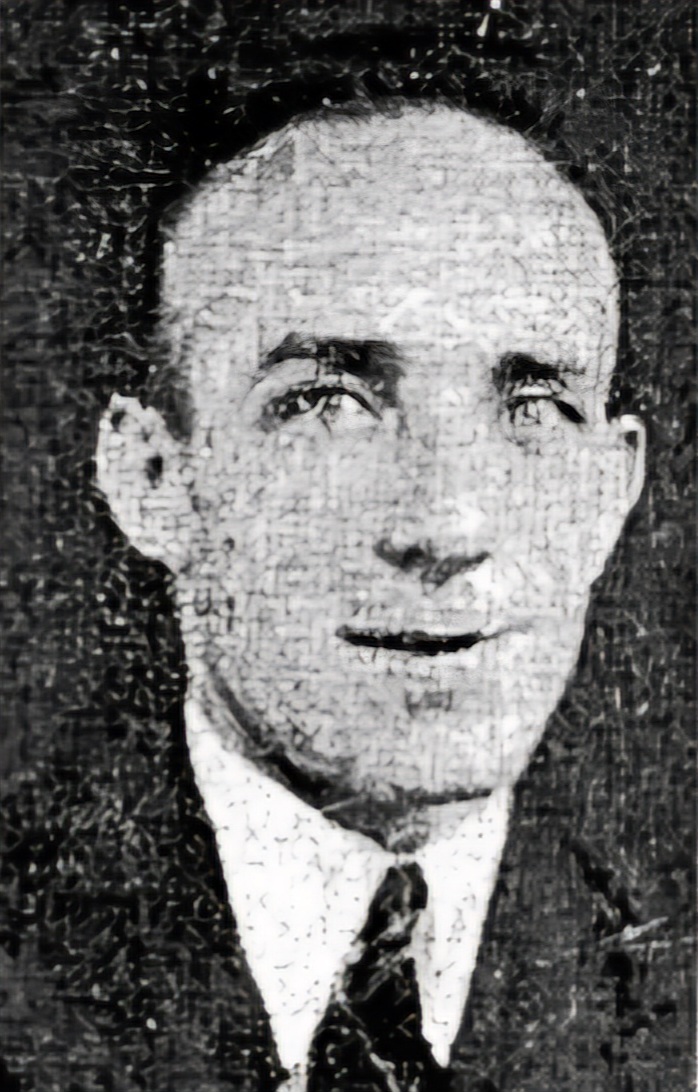
Born: 1916, Annafarney, Shercock, County Cavan
Died: 30 December 1971, Santry, County Dublin
Organisation: Irish Republican Army; Provisional IRA
Role: GHQ Staff; Quartermaster General
County: Cavan
Buried: Killann Cemetery, Shercock, County Cavan
Jack McCabe (John McCabe; 1916–1971), a native of Annafarney, Shercock, County Cavan, was a veteran IRA man who served as Quartermaster General on the GHQ Staff of the Provisional IRA. He was one of the movement’s principal explosives experts. A member of the republican movement from around 1932, he spent a decade in English prisons for his part in the 1939–40 bombing campaign, held at Dartmoor and Parkhurst. McCabe died on 30 December 1971, the victim of an accidental explosion at a garage in Santry, County Dublin. He was 55 years of age.
Early life and republican formation. Jack McCabe was born in 1916 in Annafarney, Shercock, County Cavan, where his family farmed. He assisted on the family farm until his departure for England in 1938. At his graveside, Seán Mac Stiofáin stated that McCabe had joined the republican movement at the age of sixteen, placing his enlistment at around 1932, and that in 1939, when Seán Russell took the IRA campaign to England, McCabe was one of the first into action.
Imprisonment in England and internment in Ireland: the 1939–40 bombing campaign. McCabe went to England in 1938, where he lived with his sister in Manchester before his arrest. Along with his comrade Joe Collins, he was a member of the IRA Expeditionary Force which, under the leadership of Seán Russell, carried the campaign into English territory in 1939. McCabe served as O/C of the Manchester unit, employed as an engine driver. On 22 November 1939 he was sentenced at Manchester Assizes to 20 years Penal Servitude on charges of possessing explosives and conspiracy to cause explosions. From the dock he declared: “As a member of the I.R.A. I say Long Live the Republic.” He served his sentence at Dartmoor and Parkhurst on the Isle of Wight. Held back at Dartmoor after most of his comrades were transferred to Parkhurst because the prison authorities valued him as a skilled tiler, he joined them some months later; there, with Collins, he planned an escape attempt that came close to success. In addition to his English imprisonment, McCabe also spent time in a Fianna Fáil internment camp in Ireland.
While at Parkhurst, McCabe was held alongside Joe Collins (who used the alias Conor McNessa), Denis Duggan, Jack Duggan, and Paddy Donaghy. Harry White had served as Operations Officer in the same Manchester unit. Writing from Parkhurst to Bob Doyle, an Irish veteran of the International Brigades, McCabe and his fellow prisoners publicly repudiated attempts by Mosley’s British Union movement to recruit Irish support under the guise of Irish unity. Their joint letter, published in the Irish Democrat in 1948, declared that they were working men for whom Fascism was “our deadly enemy with which there can be no compromise, no more than with other forms of imperialism,” that they had gloried in the Red Army’s defeats of German Fascism, and that they had themselves fought against O’Duffy’s Blueshirt Fascists in Ireland, some of them still bearing the marks of the iron bars and lead piping used as batons against them.
McCabe was released in 1948 alongside Collins, as the last two of the bombing campaign prisoners to be freed. A widespread campaign for their release had been conducted by the Republican Prisoners Release Association. During his imprisonment McCabe underwent beatings, hunger strikes, and forcible feedings as a political prisoner. He refused to the end of his term to concede an inch to his jailers. On release he stated that he had gone to prison a Republican and came out in the same faith.
Return to Ireland and the inter-campaign years. On his release in 1948, McCabe returned to Ireland, living first in Rathmines before moving to the Grove Park estate in Ballymun around 1956. His return to the republican movement was complicated by the attitude of Tony Magan, IRA Chief of Staff from 1948 to 1957. According to Cork republican Jim Lane, who visited McCabe in Dublin in 1959, McCabe and Collins “had encountered difficulty getting back into the IRA since they were released from prison in England in 1948,” attributing this to Magan’s insistence on a high standard of discipline and his blacklisting of veterans like McCabe and Collins as “gunmen” or undisciplined. Lane records that most of this cohort “had been kept out of the IRA throughout the 1950s and they felt that keeping in touch was a building block to a way back in.” McCabe nonetheless maintained his connections, regularly meeting with Collins, Harry White, Joe Cahill, and other veterans of the thirties and forties at gatherings in Dublin. In 1964 he was running the Dublin committee of the Gerry Madden Recovery Committee, a republican welfare body.
The 1956–62 campaign. During the border campaign of 1956–62, McCabe worked, in Seán Cronin’s words, “behind the scenes,” with his home an open house for volunteers. Michael Ryan, a participant in the campaign, records spending Christmas 1957 at McCabe’s Finglas home, which served as a safe billet, and being driven by McCabe the following day to make contact with IRA leadership in Santry.
The 1969 split and the Provisional IRA. With the eruption of anti-Nationalist violence in the North in August 1969, McCabe returned to active service. Mac Stiofáin later recalled that when the disaster of August 1969 occurred, “Jack was one of the first to step into the gap and begin to organise practical help for the people of the North.” In the period leading up to the crisis, McCabe had been writing reports to An Phoblacht (published by the Irish Revolutionary Forces, Cork, 1965–67) on the inadequacy of IRA armaments; Jim Lane, who witnessed the state of the IRA’s weapons holdings in the North at first hand in August 1969, wrote that events had proved McCabe’s assessments correct. Immediately after the December 1969 IRA Convention, McCabe was among those who met in Belfast alongside Joe Cahill and Harry White to plan an independent Northern Command; they agreed instead to send representatives to a second convention, out of which the Provisional IRA was formed. Top-level positions in the new organisation were filled at once: McCabe was appointed Quartermaster General, serving on GHQ Staff in that capacity until his death.
Death. Jack McCabe died on the evening of 30 December 1971 following an accidental explosion at a garage to the rear of Shanvara Road, Santry, County Dublin. The garage was rented from Harry White, his old comrade from the Manchester unit, who lived nearby on Shanliss Drive. McCabe had been mixing homemade explosives when a spark, caused by a steel shovel striking the concrete floor, ignited the mixture. White’s wife Kathleen was the last person to see him before the explosion. A neighbour, Peter Andreucetti, found McCabe lying badly burned, half in and half out of the garage; McCabe asked him to remove his lower dentures and water was sprinkled over him. Another witness described him as demonstrating “terrific bravery as he stood in flames” while “shouting to get the children away.” Before he died, McCabe was able to impart a caution about homemade explosive preparation to his comrades. He was taken to Dr. Steevens’ Hospital in Dublin, where he died at approximately 7 p.m. Joe Cahill was at the McCabe family home at 47 Grove Park Road, Ballymun, assisting McCabe’s wife Maureen and their daughters Geraldine and Beatrice with funeral arrangements. A statement from Sinn Féin confirmed that McCabe “was a member of the Republican movement.”


Funeral. The remains of Jack McCabe were removed from the City Morgue to his home in Ballymun on 1 January 1972. As the cortege moved through Dublin city centre, Joe Cahill and Seán Mac Stiofáin walked at its head, with eight men in black berets and grey mackintoshes flanking the Tricolour-draped coffin. The cortege stopped outside the GPO for a minute’s silence.
A special Mass in Irish was celebrated at Knockbride Parish Church, Shercock, County Cavan, three miles from Killann Cemetery, by Father Piaras O’Duill OFM Cap., Church Street, Dublin, who had himself been imprisoned as a republican during the IRA campaign of the 1950s. The church was crowded and hundreds had to wait outside. Members of the Provisional IRA formed a guard of honour inside the church. Members of Clann na Gael carried fifty wreaths, among them wreaths from the Belfast Brigade IRA, the Dublin Brigade IRA, the Army Council IRA, and from comrades in arms in Ballyconnell, County Cavan. McCabe’s daughters, Geraldine and Beatrice, were themselves members of Clann na Gael.
The coffin was carried in relays along the two-mile route to Killann Cemetery. An estimated 5,000 mourners attended, with some 150 gardaí on duty. Among those present were Joe Cahill, Ruairí Ó Brádaigh, Dáithí Ó Conaill, veteran republican Joe Clarke, and Seán Cronin, a former IRA Chief of Staff, who had flown from New York. McCabe’s brother Patsy and sister Maisie were also at the graveside.
Seán Mac Stiofáin delivered the graveside oration, opening in Irish with the words “Soldiers of Oglaigh na hEireann and our friends.” He described McCabe as “one of the greatest Republicans of our time,” saying that one of his outstanding characteristics was “the great Fenian spirit of Easter Week,” and that in almost forty years of membership he had always stuck to the true road. A bugler sounded the Last Post before four men stepped forward with revolvers and fired a volley of shots. The scale of the funeral drew attention at the highest levels of government: at the Irish Cabinet’s first meeting of 1972, ministers heard reports on the McCabe funeral, with the size of the attendance and the firing of shots over the grave recorded as having caused concern.
Inquest. At an inquest held in March 1972, the State Pathologist, Professor Maurice Hickey, confirmed that death was due to burning with no other injuries. Myles Shevlin, solicitor, gave formal evidence of identification.
Monument. In April 1973 the National Graves Association Dublin launched a public appeal for subscriptions to fund a memorial stone at Killann Cemetery, describing McCabe as a member of the 1939/40 Expeditionary Force who had “met his tragic death in December 1971, while still serving in the ranks of Oglaigh na hEireann.” The memorial, a sculptured head, was unveiled at Killann Cemetery in September 1973. Over 4,000 republicans assembled for the ceremony, with a large garda presence inside and outside the cemetery. The unveiling was performed by Joe Collins, his old comrade who had been imprisoned alongside McCabe in England in the 1940s. The oration was delivered by Joe McCallion of Derry, who described McCabe’s generation as having saved the republican movement through “the dark days of the 40s” by means of “heroic courage, dignity and vision,” and said of McCabe personally: “He suffered as few have — ten years in an English hell-hole, the struggle to raise a family, and finally the supreme sacrifice of his life. It is men like he who make nations great.” Among those present were Harry White, Ruairí Ó Brádaigh, Seán Mac Stiofáin, and Jimmy and Máire Drumm. Geraldine McCabe recited a decade of the Rosary in Irish. Fr. Tully of Shercock blessed the monument, a lone piper played a specially composed lament, and Tony Brady sounded the Last Post. Thirteen wreaths were laid, including those from Clann na nGael and the Breton Republican Army.
Writing on the first anniversary of McCabe’s death, Seán Cronin described him as “a noble man” and “a dedicated fighter for freedom.”
Written and researched by Alan Mac Fhíobhuí, founder of the Irish Republican Digital Archive.
Related Documents:
 War News (02 Dec 1939) |  21 April |  Republican News (22 September 1973) |
 Concerned (22 September 1973) |  An Phoblacht (05 October 1973) |
Related Sections:
 1924-1949: The Twilight Years |  1950-1959: Reorganisation and Resistance |  1960-1969: From the Border Campaign to the Split |
 Provisional Sinn Féin 1970-2005 |
Sources
- War News (Republican Publicity Bureau Dublin), 2 December 1939
- Irish Democrat (London), 1948 — “London Irish Reject Fascist Unity Stunt”
- Evening Herald, 31 December 1971
- Irish Independent, 31 December 1971
- Irish News, 1 January 1972
- Irish Independent, 1 January 1972
- Irish Press, 1 January 1972
- Irish Independent, 3 January 1972
- Irish Press, 3 January 1972
- Irish Examiner, 4 January 1972
- Irish Independent, 4 January 1972
- Irish Independent, 5 January 1972
- Anglo-Celt, 7 January 1972
- Nationalist and Leinster Times, 7 January 1972
- Nationalist and Munster Advertiser, 8 January 1972
- Evening Herald, 3 March 1972
- Sunday Independent, 12 March 1972
- Anglo-Celt, 8 September 1972
- Irish News, 30 December 1972
- The Irish People (New York), 30 December 1972 (Seán Cronin)
- Republican News, Vol. 2 No. 83, 21 April 1973
- Republican News, Vol. 3 No. 4, 22 September 1973
- Concerned, No. 105, 22 September 1973
- An Phoblacht, 5 October 1973
- Jim Lane, “Miscellaneous Notes on Republicanism and Socialism in Cork City, 1954–69”
- Michael Ryan, My Life in the IRA: The Border Campaign
- Joseph McKenna, The IRA Bombing Campaign Against Britain, 1939–1940
- Uinseann Mac Eoin, Harry: The Story of Harry White (Dublin: Argenta Publications, 1985)
- Ed Moloney, A Secret History of the IRA (London: Penguin, 2002)
- K. Conway, Southside Provisional: From Freedom Fighter to the Four Courts (Dublin: Orpen Press, 2014)
- Robert White, Out of the Ashes (Cork: Mercier Press, 2017)
- Gearóid Ó Faoleán, A Broad Church: The Provisional IRA in the Republic of Ireland 1969–1980